

Online dating has revolutionized the way people come across each other, but it has also transformed the modus operandi of scammers. Currently, romance scams, which are more sophisticated than asking for gift cards through fake profiles, are primarily cryptocurrency-related. These criminals exploit the rapid movements, the lack of detection, and the worldwide accessibility of the digital currency to their advantage, being those who know well how to wait for their time to come.
In the USA, the annual loss of the victims’ money to crypto-grade scams is in the billions, and one factor of romance fraud has the fastest growth. The main aspect of these scamming operations, which makes them different, and therefore, quite damaging, is not the money alone, but the emotional attachment. The con artists go through a long process of trust building, sharing daily chats, and generating the illusion of a genuine relationship before even hinting at a so-called crypto investment or an emergency that needs money.
This article explains the typical tactics used by crypto romance scammers in the US to trap their victims, and the signs that people often overlook. If you take advantage of online dating, social networks, or text services, then getting to know these patterns will surely help you catch the trouble early and prevent yourself from being the next victim.
What Are Crypto Romance Scams?
A crypto romance scam is a type of confidence fraud where someone pretends to form a genuine romantic connection, then uses that trust to steal money through cryptocurrency. It usually starts on a dating app or social media platform. The conversations feel normal at first. Friendly messages turn into daily chats. Compliments become emotional support. Over time, the scammer positions themselves as a partner, not a stranger.
Once trust is built, money enters the picture. Instead of asking for bank transfers or gift cards like older scams, they push crypto. They might talk about a “safe investment,” a trading tip from a relative, or a temporary problem that can only be solved with digital currency. Because crypto transactions are hard to reverse and often anonymous, victims have little chance of getting their funds back once they send them.
Law enforcement agencies in the US classify romance scams as a form of confidence fraud because the manipulation is emotional first and financial second. The scammer’s real product is not crypto. It is a belief. Belief that the relationship is real. Belief that helping them is safe. Belief that the opportunity is exclusive.
What makes crypto romance scams different from other online fraud is the mix of intimacy and technical confusion. Many victims do not fully understand wallets, blockchains, or transaction fees. Scammers take advantage of that gap, guiding people step by step until the money is gone and the person on the other side disappears.
Key Crypto Wallet Scam Trends and Statistics in Early 2026
Crypto romance scams are no longer a niche problem. They are now one of the most profitable online fraud models in the US, driven by wider crypto adoption, AI-generated fake identities, and people spending more time building relationships online.
By the end of 2025, blockchain analysis firms estimated that global crypto scam losses crossed $17 billion, with the US accounting for a large share of reported romance-related cases. Romance scams also remain one of the highest-loss fraud categories per victim, often draining savings rather than small amounts.
What is changing is how professional these scams have become. Organized groups now run hundreds of fake profiles at once, use scripted conversations, and automate parts of the grooming process using AI chat tools and voice cloning.
Here is a snapshot of where things stand going into 2026.
| Metric (US Focus) | Latest Data |
| Estimated global crypto scam losses (2025) | $17+ billion |
| Reported romance scam losses (latest full year) | $1+ billion |
| Average loss per crypto romance victim | $5,000–$10,000 |
| Most common payment method in high-value romance scams | Cryptocurrency |
| Fastest-growing scam format | “Pig butchering” crypto romance scams |
| Platforms most used by scammers | Dating apps, Instagram, Facebook, Telegram, WhatsApp |
A few patterns stand out:
- Crypto has overtaken wire transfers and gift cards as the preferred payment method in romance scams involving large sums.
- Long-term scams are increasing. Many now run for months before any money is requested.
- Victims are getting younger. Reports show steady growth among people in their 20s and 30s, not just retirees.
- AI is accelerating scale. Fake profile photos, video calls using deepfakes, and realistic voice messages are becoming common.
The takeaway is simple. This is no longer about clumsy scammers sending broken English messages. These are structured operations designed to feel real, personal, and safe right up until the money is gone.
How Scammers Identify and Manipulate Victims?
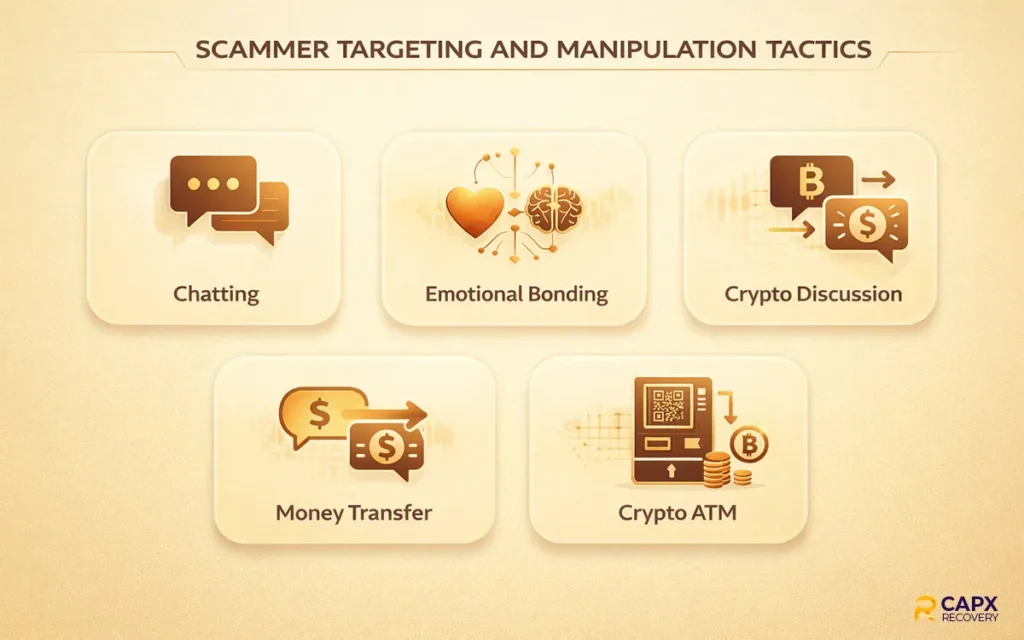
Crypto romance scams rarely start with anything suspicious. Most begin the same way normal online relationships do, with a message, a like, or a casual reply to a story. The difference is what happens after.
Many of these conversations begin on social platforms rather than dating apps. This breakdown of common social media scams shows how often Instagram, Facebook, and messaging apps are used as the first point of contact.
They focus on platforms where people expect to meet new connections:
- Dating apps and matchmaking websites
- Instagram, Facebook, and TikTok
- LinkedIn, especially for “professional” personas
- Messaging apps like WhatsApp and Telegram, after moving the chat off the original platform
Public profiles, recent breakups, or posts about loneliness, investing, or personal stress often get extra attention because they signal emotional or financial vulnerability.
The First Phase: Building Trust
Scammers follow a predictable emotional pattern:
- Friendly introduction that feels natural
- Shared interests or similar life stories
- Frequent messaging, often daily
- Compliments and emotional support
- Subtle talk about future plans together
The goal is not romance right away. It is consistency. By showing up every day, they become part of the victim’s routine.
The Second Phase: Positioning Themselves as Credible
Once trust is in place, the scammer slowly adds authority:
- Claiming to work in finance, tech, or overseas business
- Talking confidently about crypto or investments
- Mentioning a successful friend or relative who trades
- Showing fake screenshots of profits or account balances
Nothing is asked for yet. This stage is about planting the idea that they are knowledgeable and safe to listen to.
The Final Phase: Introducing Crypto
Only after weeks or months does the money conversation begin:
- “I want us to build a future together.”
- “I found a way to grow our savings safely.”
- “I need help right now, but I will pay you back.”
From there, they guide the victim step by step through buying crypto, setting up wallets, and sending funds. By the time doubts appear, the emotional bond often feels stronger than logic.
The Most Common Tactics Used by Crypto Romance Scammers
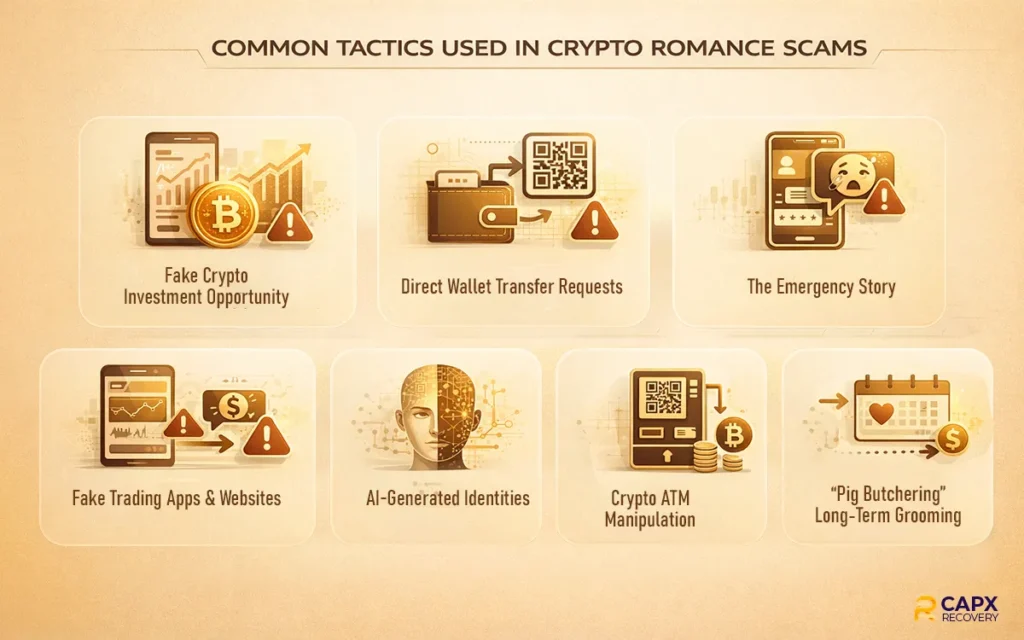
Once the conversation shifts to money, the scam follows familiar patterns. The details change, but the mechanics stay the same. Here are the tactics seen most often in the US.
The Fake Crypto Investment Opportunity
This is the most common setup.
The scammer claims they or someone close to them knows a “safe” or “private” way to make money with crypto.
They might mention:
- A special trading platform
- Early access to a new token
- A high-return strategy that they use themselves
- A mentor or uncle who works in finance or crypto
Victims are shown fake dashboards, fake profits, and screenshots of withdrawals that never happened. Small early gains are sometimes allowed to build confidence. Then the larger deposits vanish.
Direct Wallet Transfer Requests
Instead of using fake platforms, some scammers go straight to:
- “Send the crypto to this wallet address”
- “Move your funds to my secure wallet for now”
- “Hold it for me until I resolve this problem”
They explain it as temporary, safe, or necessary for tax or verification reasons. Once the crypto is sent, it cannot be reversed.
The Emergency Story
This tactic plays on emotion rather than greed.
Common stories include:
- Frozen bank accounts while abroad
- Medical emergencies
- Business deals that fell through
- Customs or legal problems that require “fees”
Crypto is framed as the fastest and only solution.
Fake Trading Apps and Websites
Victims are directed to polished-looking apps or websites that:
- Show fake account balances
- Display fake market charts
- Allow “deposits” but block withdrawals
Everything looks real until the victim tries to cash out.
AI-generated Identities
Modern scams often use:
- AI-generated profile photos
- Voice cloning for phone calls
- Pre-recorded or deepfake video messages
This removes many traditional red flags like stolen images or inconsistent appearances.
Crypto ATM Manipulation
Some victims are walked through using Bitcoin ATMs:
- Step-by-step instructions over the phone
- Claims that this protects their money from hackers
- QR codes that send funds directly to the scammer
This is common with older victims, but still growing among younger users.
“Pig Butchering” Long-term Grooming
This long-term grooming method is known as a pig butchering scam, and it has become one of the most financially destructive forms of crypto fraud in the US.
The scammer:
- Builds the relationship over months
- Encourages small crypto investments
- Gradually increases the amounts
- Pushes for life savings, loans, or borrowed money
By the end, victims often lose tens or hundreds of thousands of dollars.
Real Examples of Crypto Romance Scams in the US
Behind every statistic is a real person who thought they had found a genuine connection. These cases follow different paths, but the emotional pattern is often the same.
The long-term “investment partner”
A woman in her 40s met a man on a dating app who claimed to work in international finance. They spoke daily for nearly three months. He shared photos of his lifestyle, talked about future travel plans together, and slowly introduced crypto trading into their conversations. He guided her to a professional-looking platform where her first small deposits appeared to grow.
When she tried to withdraw, the site claimed she needed to pay “tax fees” in crypto first. She sent more money. Then more. After losing over $80,000, the platform stopped responding, and the man disappeared.
The impersonated identity
In several US cases, scammers have stolen photos of real people and used them across multiple dating platforms for years. Victims later discovered the person they trusted never existed.
One American man learned that his photos had been used in dozens of romance scams targeting women across the country, all tied to crypto payment requests. By the time victims realized the truth, the funds were already gone. This type of identity theft is closely related to catfishing, where scammers create fake personas to emotionally manipulate victims over long periods.
The Bitcoin ATM setup
An older victim reported meeting someone on Facebook who claimed to be a widowed engineer working overseas. After weeks of conversation, he said his business account was frozen and asked for temporary help. He walked her through using a Bitcoin ATM at a local gas station, staying on the phone while she deposited cash. Within minutes, the crypto was transferred out. She never heard from him again.
These stories differ in detail, but the structure is consistent: emotional connection first, financial trust second, and crypto as the final tool that makes the theft fast and irreversible.
Red Flags and Warning Signs of Crypto Romance Scams
Crypto romance scams work because they feel personal. Still, there are patterns that show up again and again. Spotting even one of these should make you pause. Seeing several at once is a strong sign that something is wrong.
Relationship moves too fast
- Talks about love or commitment within days or weeks
- Uses phrases like “soulmate” or “future together” very early
- Pushes for emotional dependence
Avoids real-world verification
- Refuses video calls or always has technical excuses
- Won’t meet in person despite living “nearby”
- Has limited or overly polished photos
Crypto enters the conversation suddenly
- Claims to have a secret or guaranteed investment method
- Offers to teach you crypto step by step
- Shows screenshots of profits, but won’t explain clearly how it works
Pressure and urgency
- “This opportunity expires today”
- “I need help right now. I have no one else”
- Tries to rush you through buying or sending crypto
Strange financial requests
- Asks you to send crypto to a private wallet
- Requests payment of “fees” or “taxes” before withdrawals
- Suggests using a Bitcoin ATM
Secrecy
- Tells you not to discuss the relationship or investment with friends or family
- Claims others “wouldn’t understand” or are jealous
A simple rule helps: real partners do not need your money, your crypto wallet, or your financial secrecy to build a relationship.
What to Do If You Suspect You’re Being Targeted by a Scam
If something feels off, trust that instinct. Acting early can limit the damage.
Stop engaging
- Do not send more money or crypto
- Do not share personal details, ID documents, or wallet keys
- Cut off communication, even if it feels emotionally difficult
Save evidence
- Take screenshots of chats, profiles, wallet addresses, and transaction IDs
- Keep URLs of any platforms or apps they asked you to use
Report it
- File a report with the FBI’s IC3 portal
- Report the profile on the dating app or social platform
- Submit details to the FTC fraud reporting system
Protect your accounts
- Change passwords on email, social media, and crypto platforms
- Enable two-factor authentication
- Check your devices for remote access apps or malware, and see if they helped you set anything up
Get professional guidance
If money has already been sent, time matters. Specialists who deal with crypto romance scams can help you document what happened, understand your options, and avoid follow-up scams that often target victims again.
Being targeted does not mean you were careless or foolish. These scams are engineered to manipulate smart, cautious people. Some victims also choose to speak with specialists who focus specifically on romance scam cases and crypto-related fraud to understand recovery options and prevent further losses.
How to Stay Alert and Protect Yourself From Crypto Scams
Crypto romance scams thrive on silence, speed, and emotion. They work because the relationship feels real, the opportunity sounds logical, and the pressure to act is intense. By the time doubts surface, the money is often already gone.
Understanding how these scams operate gives you back control. When you know the tactics, the patterns become easier to spot. Sudden crypto advice from a romantic interest, requests for secrecy, or stories that always block meeting in person are not small details. They are warnings.
Online connections can be meaningful and genuine. But trust should never require financial risk, private keys, or rushed decisions. Staying cautious does not make you cold. It makes you protected.
If this article helps even one person pause before sending crypto to someone they have never met, it has done its job.
Frequently Asked Questions (FAQs)
Can crypto transactions be reversed if I was scammed?
In most cases, no. Cryptocurrency transfers are permanent once confirmed on the blockchain. That is why scammers prefer crypto. It is fast, global, and extremely difficult to recover.
Why do scammers prefer crypto over bank transfers?
Crypto does not require real names, works across borders, and is harder to trace. It also bypasses many fraud protections that banks use, making it ideal for romance scams involving large sums.
Are men or women more likely to be targeted?
Both are targeted heavily. Women report romance scams more often, but men tend to lose larger amounts on average, especially in crypto-based investment scams.
What should I do if I already sent crypto to a scammer?
Stop all contact immediately, document everything, report the scam to authorities, and secure your accounts. Acting quickly can help prevent further losses and protect you from follow-up scams.

