
Crypto Scam Funds Converted to Cash Within Hours: Why Nothing Could Be Recovered
Story Summary
- Emma, a 45-year-old investor, deposited more than $120,000 into a crypto platform she discovered through social media.
- The platform appeared trustworthy, with realistic account growth and ongoing support from platform representatives.
- Withdrawal attempts triggered a series of fees and additional requirements that delayed access to her funds.
- Researching the platform uncovered complaints from other investors who had experienced the same pattern.
- Capx Recovery reviewed the transaction history and traced how quickly the assets moved after each deposit.
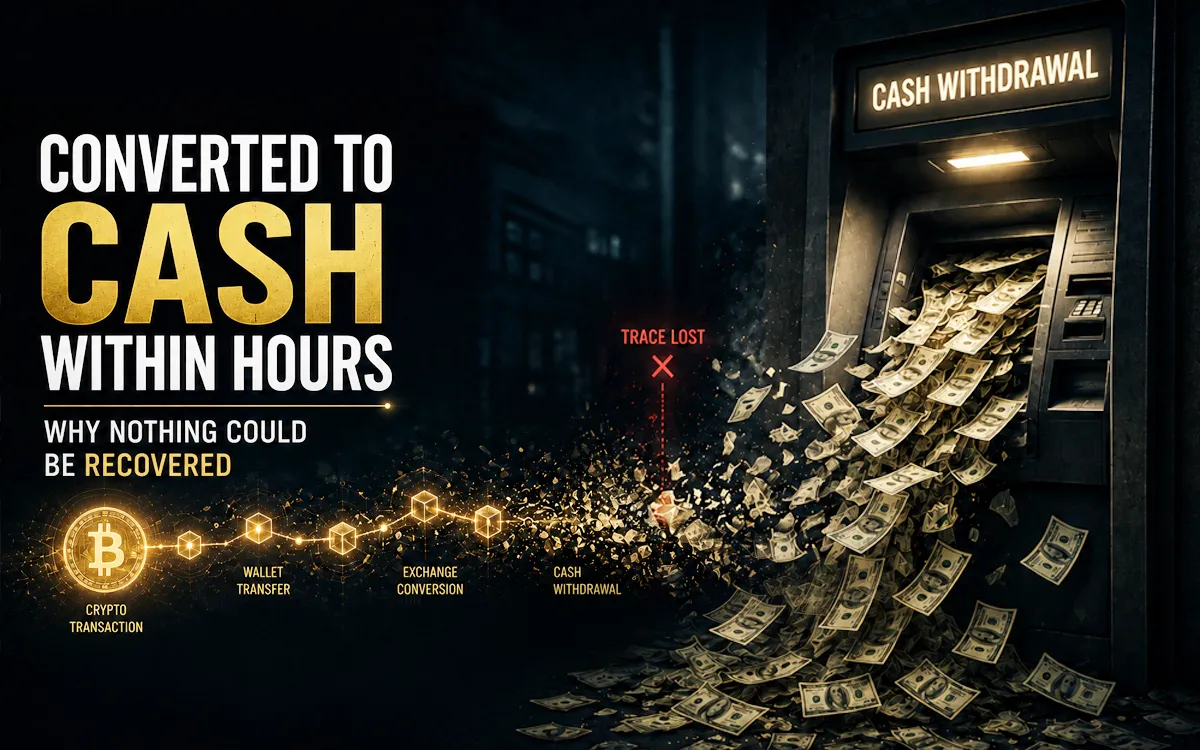
- Most of the funds were converted into cash through P2P networks and loosely regulated exchanges, leaving no practical recovery route.
"I Thought I Was Solving the Problem. I Was Actually Making It Worse."
My name is Emma, and I'm 45 years old. I invested more than $120,000 into what appeared to be a legitimate investment platform. Everything seemed fine until I requested a withdrawal and was told that additional fees had to be paid before my money could be released. What I didn't realize at the time was that every payment was pulling me deeper into the problem.
I first discovered the platform through a social media advertisement and spent time speaking with representatives who seemed knowledgeable and professional. The website featured market charts, account statistics, trading activity, and responsive customer support. Nothing about the experience felt suspicious, which made it easy to trust what I was seeing.
The withdrawal never became easier—every new payment simply created another obstacle.
Building Trust One Deposit at a Time
I started cautiously with a deposit of around $5,000. The funds appeared in my account quickly, and the balance soon showed modest gains. The returns looked realistic rather than extraordinary, which made them easier to believe.
As my confidence grew, I continued adding funds over several weeks. The platform behaved exactly as I expected, account balances increased steadily, support remained responsive, and there were no obvious warning signs. By the time I stopped investing, I had transferred slightly more than $120,000 and felt confident I had made a sound financial decision.
What felt like a series of small decisions eventually became a significant investment.
The Withdrawal That Never Happened
Everything changed when I submitted a withdrawal request. Instead of processing the transaction, support informed me that a fee had to be paid before the withdrawal could be released. Because the platform had appeared legitimate up to that point, I accepted the explanation and paid the requested amount.
Unfortunately, that wasn't the end of it. A few days later, another requirement appeared, followed by additional verification requests and further reviews. Every step seemed to introduce a new obstacle, yet the withdrawal was never rejected outright. It always felt like the funds were just one final requirement away from being released.
Each payment and verification request made me believe I was fixing the problem when I was actually extending it.
When the Pieces Started Coming Together
As the delays continued, I became increasingly concerned. I began reviewing old emails, payment confirmations, support conversations, and transaction records to understand what was happening. What started as a quick review quickly turned into hours of research.
Eventually, I searched for independent information about the platform and found investors describing nearly identical experiences. Deposits were accepted without issue, account balances appeared healthy, and withdrawal requests triggered an endless series of complications. Reading those accounts was difficult because I could see my own situation reflected in them.
The more stories I found, the harder it became to believe my situation was unique.
What Happened After the Money Left My Account
While searching for answers, I came across Capx Recovery. At that point, I wasn't looking for promises. I wanted clarity about where the funds had gone and whether the transactions could still be followed.
Using the transaction records and wallet information I had saved, the movement of funds was reviewed. The initial transfers were easy to identify, showing how quickly the assets moved after leaving my account. What surprised me most was how rapidly those funds were transferred through multiple destinations instead of remaining connected to the investment platform as I had assumed.
The transaction history showed that the money was moving long before I realized there was a problem.
Why There Was No Recovery Path
The transaction review answered many of my questions, but it also revealed why the situation had become so difficult. Although there was evidence showing how the funds moved through different wallets, many of the transfers eventually passed through exchanges and peer-to-peer channels that offered very limited visibility.
The issue wasn't a lack of documentation. The challenge was that the assets had already moved beyond environments where meaningful tracking could continue. By the time I fully understood what had happened, most of the funds had already traveled through systems that provided very little transparency, leaving no realistic recovery route available.
The biggest obstacle wasn't finding evidence—it was how quickly the funds had disappeared beyond traceable channels.
What I Took Away From the Experience
Looking back, I understand why the scam worked. The website looked convincing, the account activity appeared normal, and the people behind it were patient, responsive, and professional. Nothing felt obviously fraudulent in the beginning.
What I learned is that warning signs often appear gradually rather than all at once. If I could change one thing, I would have paid much closer attention the moment my withdrawal became complicated. Legitimate investment platforms may have procedures, but they don't create an endless chain of new conditions every time a customer tries to access their own money.
The most important lesson was realizing that withdrawal problems are often far more significant than they first appear.