Crypto Scam Case: Why Only 30% Was Recoverable After Cross-Chain Transfers

Story Summary
- Laura, a 47-year-old from Manchester, invested roughly $95,000 through a crypto trading platform she discovered in a Facebook investing group.
- The platform appeared trustworthy and showed steady account growth over several months.
- Withdrawal requests led to delays, reviews, and changing explanations from support.
- Online research revealed that other investors had experienced nearly identical problems.
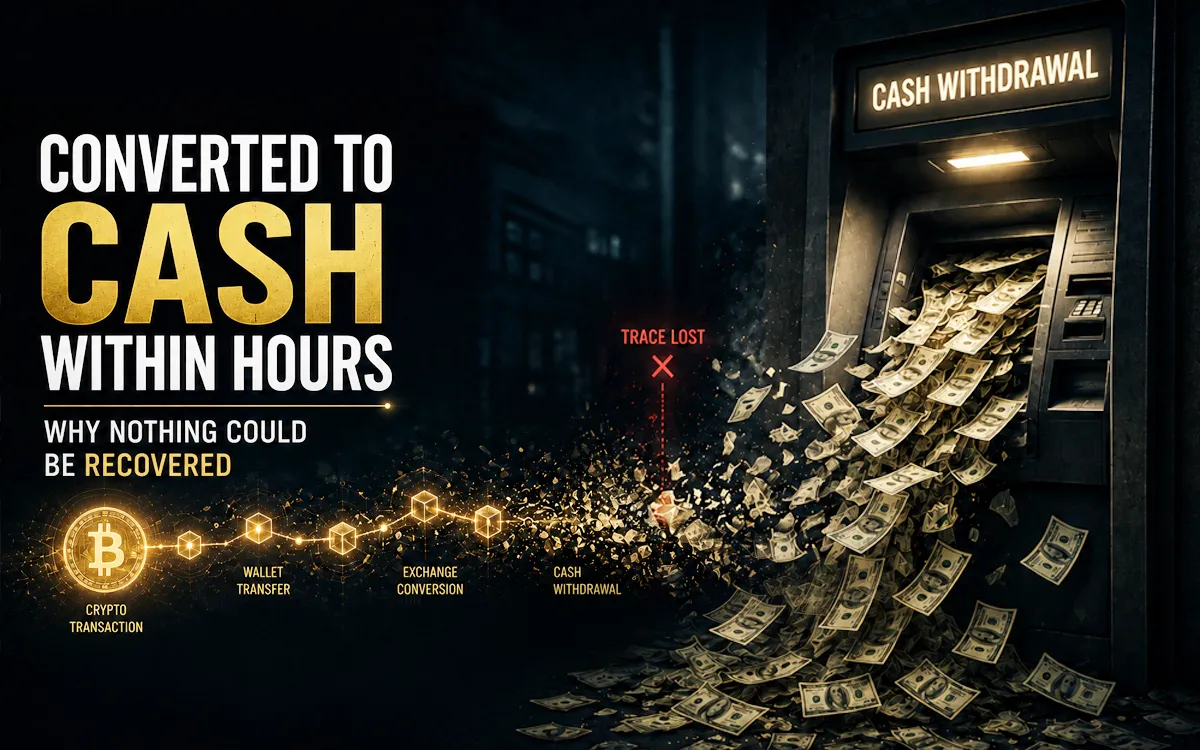
- Transaction tracing later showed the funds moving across blockchains, intermediary wallets, mixers, and privacy-focused cryptocurrencies.
- Only a portion of the assets remained traceable, and roughly 30% of the funds could still be connected to locations where recovery efforts were possible.
"I Thought My Money Was Sitting in an Account. It Wasn't."
My name is Laura. I'm 47 and live in Manchester. Over time, I transferred roughly $95,000 into what I believed was a legitimate crypto investment platform. My account balance kept growing, everything appeared normal, and I had no reason to question it—until my first withdrawal request triggered a series of delays and explanations that never led anywhere.
I originally found the platform through a Facebook investing group and spent time getting comfortable with both the platform and the person who introduced it to me. The website looked professional, support was responsive, and the account showed consistent growth. From the outside, it looked exactly like the kind of investment opportunity I had been hoping to find.
The money I saw on the dashboard felt real. What happened behind the scenes was a very different story.
The Withdrawal Request Changed Everything
The first sign of trouble appeared when I decided to withdraw part of the funds. I wasn't trying to close the account. I simply wanted to test the withdrawal process and access a portion of the money.
Instead of receiving the funds, I was told that additional reviews were required before the request could be approved. At first, I wasn't concerned. Financial platforms often have verification procedures, and I assumed the delay was temporary.
What bothered me was what happened next. Every time I completed one requirement, another issue appeared. One representative mentioned compliance checks, while another referred to account verification. Later, I was told there were additional requirements related to larger withdrawals.
The explanations kept changing, but the result stayed the same. My withdrawal remained pending.
As the delays continued, communication became less helpful. Responses were slower, answers were vague, and nobody could provide a clear timeline for when my money would be released. I spent weeks convincing myself there had to be a reasonable explanation because I didn't want to believe the alternative.
Eventually, I started researching the platform more thoroughly. That's when I found complaints, discussion threads, and stories from other investors describing experiences that sounded almost identical to mine. Different people had invested different amounts, but the pattern was remarkably consistent. Deposits were accepted without problems, account balances continued growing, and issues only appeared when someone attempted to withdraw their money.
The more I researched, the more difficult it became to ignore the similarities between their stories and my own.
What I Learned After Investigating
Once I accepted that I might be dealing with a scam, my focus shifted completely. Instead of waiting for another explanation from support, I started gathering every record I had saved, including transaction records, wallet addresses, screenshots, emails, withdrawal requests, and chat conversations.
During that process, I came across Capx Recovery. I wasn't looking for promises. At that point, I wanted answers and a clearer understanding of what had happened to the funds after they left my account.
After reviewing the information, they began tracing the movement of the transactions. What I learned was very different from what I had assumed while watching the account balance grow. The funds had not simply remained inside the platform waiting to be withdrawn. Instead, they had already moved through multiple wallets and transactions.
Some parts of the transaction trail were still visible, while others had become increasingly difficult to follow due to additional transfers and movement across different wallets. The investigation showed how quickly funds can be moved once they leave an investor's control and why timing often plays an important role when trying to understand where assets have gone.
Not every transfer could be followed to a useful destination, and not every part of the process produced clear answers. However, enough information remained available to build a much clearer picture of what had happened. Some of the funds could still be identified, and part of the assets was ultimately recovered.
Looking back, the lesson that stays with me isn't about cryptocurrency itself. It's about how convincing these platforms can appear and how easy it is to trust what looks like a legitimate investment account.
What I thought was money sitting safely in an account was actually moving long before I realized there was a problem.