
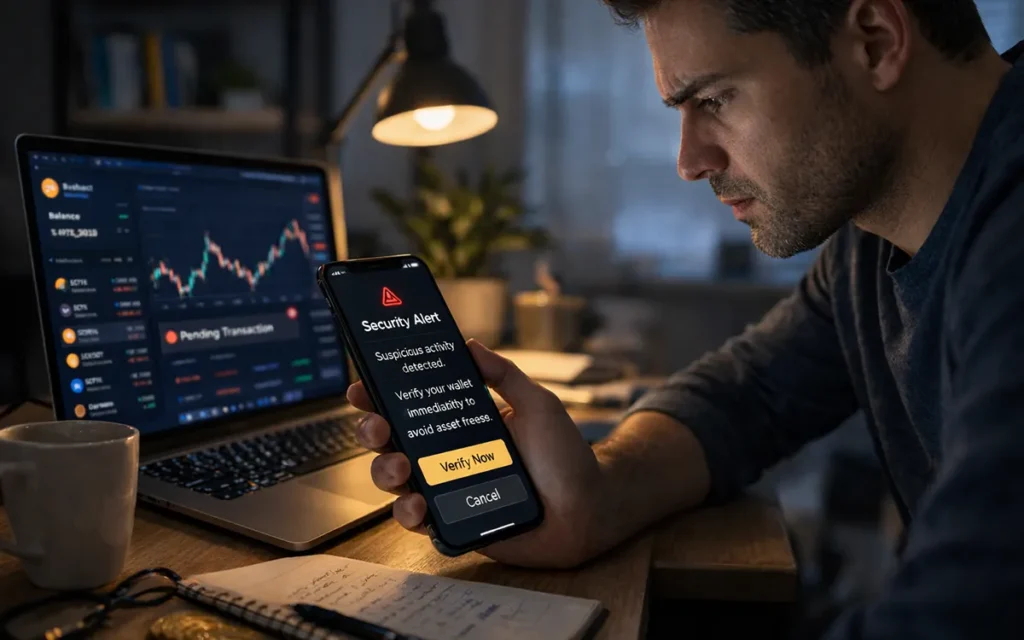
Crypto wallet scams don’t work because people are careless. They work because they feel urgent, personal, and irreversible.
Crypto moves fast by design. It is impossible to roll back transactions. It has no customer support button to reverse a bad click. Fraudsters take advantage of such a fact and arrange situations of panic when clear thinking is dangerous and fast action is safe.
Estimates indicate that by the end of 2025, the total annual losses to crypto scams worldwide had been in the tens of billions, with a rising portion of the overall number coming as wallet fraud. The largest change is not only volume. It’s how scams are delivered. False security notices, pressing wallet notices, and fake support agents now look refined, impeccable, and real.
Fear does the heavy lifting. Fear of losing funds. Fear of account suspension. The panic to fix a problem within a tight deadline. When this fear sets in, even seasoned users will skip simple checks that they would not have done otherwise.
This paper dissects the way urgency and fear are created in the scam of crypto wallets, the specifics of the mechanisms that scammers exploit, and the way to determine when the pressure itself is the largest red flag.
The Psychology Behind Urgency and Fear in Crypto Scams
Urgency works because it shuts down analysis. Fear works because it narrows attention. Together, they push people into fast decisions they would never make calmly.
In crypto, this effect is amplified. There’s no reset button. Once funds move, they’re usually gone. Scammers know this, so they design messages that feel like emergencies rather than choices.
They rely on a few predictable psychological triggers:
- Loss Aversion
People are more motivated to avoid losing money than to gain it. A warning about funds being “at risk” creates instant pressure.
- Time Compression
Short deadlines force snap decisions. “Act in 10 minutes” makes verification feel dangerous.
- Authority Bias
Messages posing as wallet security teams, compliance departments, or validators borrow credibility that users are trained to trust.
- Cognitive Overload
Technical language, transaction hashes, and fake error codes overwhelm users and discourage questions.
Crypto scams are a form of social engineering, not technical hacking. The goal isn’t to break the wallet. It’s to break the user’s decision-making process. Once fear takes over, clicking a link or signing a transaction feels like damage control, not a risk.
This is why smart, experienced users still get caught. The scam isn’t targeting ignorance. It’s targeting human psychology under pressure.
Why Crypto Wallets Are Prime Targets
Crypto wallets sit at the center of everything. They hold assets, approve transactions, and act as the gateway to dApps, bridges, and exchanges. That makes them the most efficient attack point for scammers.
Unlike banks, most wallets are self-custodial. There’s no fraud department monitoring activity and no support team that can reverse a bad transfer. When something looks wrong, users feel like they’re on their own. Scammers step into that gap and pretend to help.
Many users assume all wallets offer the same level of protection, which isn’t true. Choosing a wallet with strong security defaults, clear permission controls, and transparent documentation can significantly reduce exposure to urgency-based scams. Read how to Choose a Safe Crypto Wallet guide to break down what actually matters.
Wallet interfaces also create confusion. Pop-ups asking for approvals, signature requests, and gas fees are normal parts of using crypto. Scammers copy this exact flow so their fake alerts blend in with real actions.
A few factors make wallets especially vulnerable:
- Irreversible Transactions
Once funds move, there’s usually no recovery path.
- No Official Outreach Model
Real wallets don’t message users first, but many people still expect they might.
- Extension And Mobile Risks
Browser wallets and mobile apps are exposed to phishing sites, fake updates, and malicious dApps.
- Permission-Based Attacks
One bad approval can drain a wallet without another click.
This is why urgency-based scams focus on wallets instead of exchanges. Pressure works best when users feel fully responsible and completely alone.
Common Urgency-Based Crypto Wallet Scam Scenarios
Urgency scams follow patterns. Once you recognize them, they’re hard to unsee. The language may change, but the pressure is always the same: act now or lose everything.
Fake Security Alerts
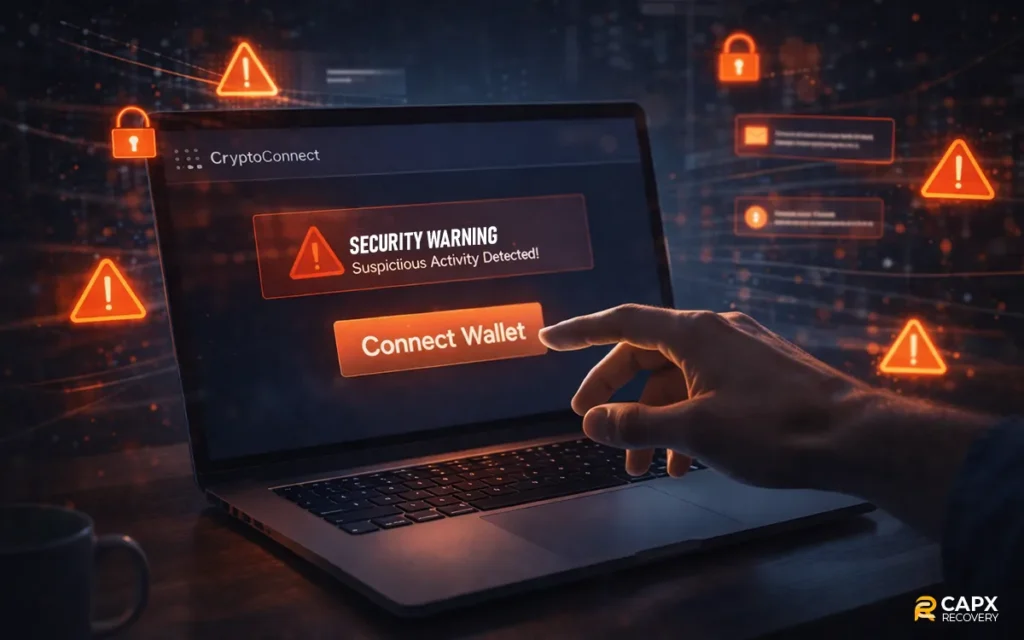
These scams usually start with a message that looks like a warning, not a pitch. It might arrive by email, Telegram, Discord, X, or as a pop-up on a fake site.
Common phrases include:
- Suspicious activity detected on your wallet
- Immediate verification required
- Your wallet will be frozen in 10 minutes
- Unusual login attempt from a new location
The goal is to trigger fear before you question the source. The link leads to a fake wallet page where you’re asked to connect, sign in, or enter recovery details. Once you do, the scam is over.
Real wallets don’t send emergency messages. They don’t freeze accounts. They don’t ask users to “secure” funds through links.
Withdrawal or Gas Fee Traps
This scam hits after users believe they’ve earned or recovered funds. A fake platform claims your balance is ready, but is blocked by a final step.
You’re told to:
- Pay a withdrawal fee
- Add gas to unlock funds
- Complete one last verification transaction
Fear kicks in because the money feels close. Users rush, thinking this is the last obstacle. In reality, there is no balance, and every payment goes straight to the scammer.
This pattern shows up repeatedly in crypto withdrawal fee scams and recovery fraud schemes.
dApp and Approval Phishing
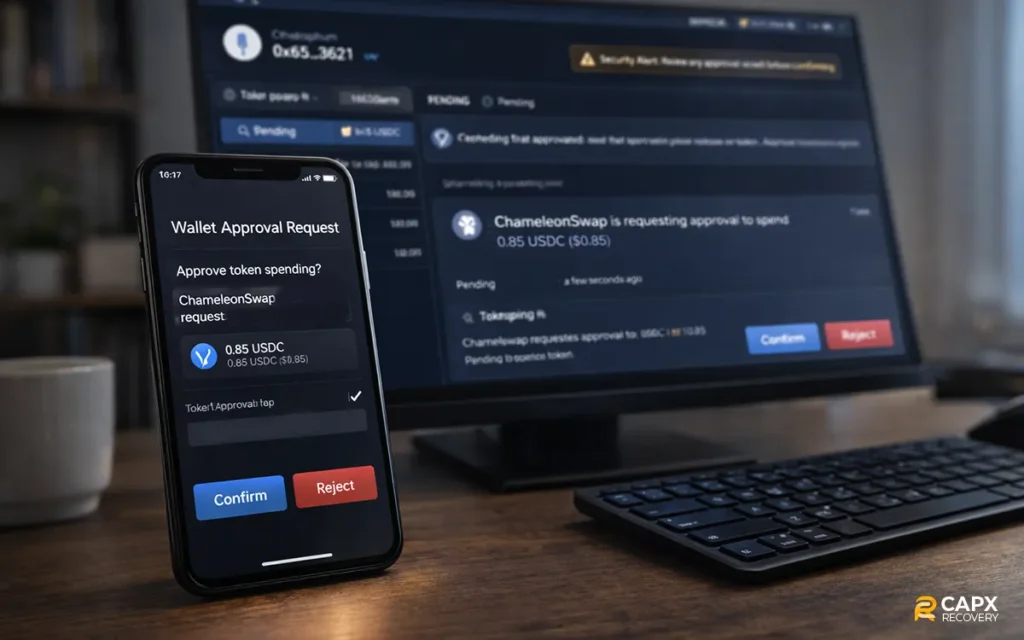
Instead of asking for private keys, these scams abuse wallet permissions.
A fake dApp claims:
- Emergency contract update required
- Security approval needed
- Asset migration must be completed now
Users are rushed into signing a transaction they don’t understand. That single approval can give unlimited access to their wallet, allowing assets to be drained later without warning.
Urgency matters here because users don’t stop to read what they’re actually approving. Pressure replaces caution, and the wallet does exactly what it was told to do.
How Fear Overrides Logic During a Scam
When fear shows up, logic usually leaves first.
Urgency-based crypto scams are designed to trigger a stress response, not a technical failure. Once someone believes their funds are about to disappear, the brain shifts into protection mode. The goal becomes stopping the loss, not evaluating the situation.
That’s when normal habits break down. Users stop checking URLs. They stop questioning who is contacting them. They stop reading transaction details. Every extra second feels like a risk.
Scammers take advantage of this moment by:
- Limiting response time so verification feels unsafe
- Adding technical language to discourage questions
- Repeating warnings to keep anxiety high
Fear also creates tunnel vision. Victims focus only on the threat being presented and miss obvious red flags around it. The scam doesn’t need to be perfect. It just needs to feel urgent enough.
This is why advice like “be more careful” misses the point. The problem isn’t carelessness. It’s pressure. Any situation that makes you feel rushed in crypto should be treated as a warning, not a call to act.
Tactics Scammers Use to Create Urgency
Urgency in crypto scams isn’t accidental. It’s scripted. Scammers use the same pressure tactics because they consistently work, especially when users are already anxious about security.
These tactics are designed to make stopping feel more dangerous than continuing.
Common Urgency Tactics You’ll See
- Artificial Deadlines
Messages claim your wallet will be frozen, flagged, or drained unless you act within minutes.
- Escalating Warnings
If you hesitate, the tone sharpens. “Final notice” or “last chance” messages appear to raise stress.
- Authority Impersonation
Scammers pose as wallet security teams, compliance officers, validators, or recovery agents.
- Technical Overload
Fake transaction hashes, error codes, and blockchain jargon are used to sound legitimate and discourage questions.
- Isolation Pressure
Victims are told not to contact anyone else because it could “delay” or “invalidate” the fix.
Urgency Claims Vs Reality
| What the message says | What’s actually happening |
| Immediate action required | No real deadline exists |
| Funds are at risk | Wallets don’t broadcast alerts |
| Security team is contacting you | Legit wallets don’t DM users |
| Final warning | Scripted pressure tactic |
If a message makes you feel panicked, rushed, or cornered, that feeling is the signal. Real crypto systems don’t rely on fear to protect users. Scams do.
Latest Crypto Scam Trends (2025 to Early 2026)
Urgency-based wallet scams aren’t slowing down. They’re getting cleaner, faster, and harder to spot.
The biggest shift since 2025 is how professional these scams feel. Messages are better written. Fake sites load faster. Scam flows now mirror real wallet behavior almost perfectly. The goal is to remove anything that might give users time to doubt.
Several trends stand out.
- Wallet approval draining has surged
Instead of asking for seed phrases, scammers push users to sign malicious approvals. One rushed signature can quietly drain assets later.
- AI-generated scam messages
Scammers now use AI to personalize messages, adjust tone in real time, and respond convincingly to questions. This makes fake support agents harder to distinguish from real ones.
- Cross-chain pressure tactics
Users are told funds are “stuck” during bridging or migration and must act immediately to recover them. Urgency is framed as a technical necessity.
- Scam-as-a-service growth
Prebuilt scam kits, fake dashboards, and scripted urgency flows are sold to non-technical criminals, increasing volume and consistency.
Recent industry reports through late 2025 show:
- A year-over-year increase in crypto scam losses, with wallet-related fraud among the fastest-growing categories
- Self-custody wallet users are targeted more often than exchange users
- Phishing and social engineering are responsible for most successful attacks, not protocol exploits
The trend is clear. Scams are moving away from obvious deception and toward psychological manipulation. The faster they can make you act, the less they need to hide.
How to Pause, Verify, and Protect Yourself
The most effective defense against urgency-based scams is simple. Slow the moment down.
Scammers rely on speed because pressure collapses judgment. The moment you pause, the scam starts to fall apart.
Use The 60-Second Rule
If a message tells you to act immediately, take one full minute before doing anything. Don’t click. Don’t reply. Just breathe and read it again. Real crypto systems don’t punish you for slowing down.
What To Check Before You Act
- Source
Wallets and blockchains don’t send DMs, emails, or pop-ups asking for urgent action.
- Links
Never click links from security alerts. Go directly to the official site or app you already use.
- Permissions
Read transaction and approval details carefully. If you don’t understand it, don’t sign it.
- Verification
Confirm issues through official documentation or trusted community channels, not private messages.
- Hardware protection
Hardware wallets add friction that often breaks urgency-based scams by forcing deliberate confirmation.
Scams succeed when users feel alone and rushed. Verification restores control. If something is real, it will still be real after you double-check.
What to Do If You’ve Already Acted Under Pressure
If you’ve clicked a link, signed a transaction, or approved something you didn’t fully understand, don’t panic. Panic is what got you here, and more panic can make things worse.
First, stop interacting with the scammer. Don’t reply, don’t follow new instructions, and don’t send additional funds, no matter what they promise.
Next, take practical steps:
- Revoke wallet permissions immediately using a trusted permission manager
- Move remaining assets to a new, secure wallet
- Disconnect the compromised wallet from all dApps
- Document transaction hashes, addresses, and timestamps
Be wary of anyone offering guaranteed recovery or asking for upfront fees. Secondary scams often target people right after an initial loss by exploiting hope instead of fear.
Fast action can limit damage, but honesty with yourself matters more. The goal now is containment, not recovery promises.
Final Thoughts: Urgency Is the Real Red Flag
In crypto, urgency is rarely legitimate.
Blockchains don’t rush users. Wallets don’t issue countdowns. Security doesn’t arrive through panic-filled messages or surprise DMs. When fear shows up, it’s usually a sign that someone wants you to act before you think.
The safest move in crypto is often doing nothing for a moment. Pausing breaks the scam’s momentum and gives logic time to catch up.
If a message pressures you, rushes you, or makes you feel cornered, treat that feeling as the warning itself. In crypto, calm decisions protect funds. Urgency is what scammers need, not what users do.
FAQ
Can real crypto wallets ever freeze or suspend funds?
No. Non-custodial wallets don’t control user funds and can’t freeze accounts. Any message claiming your wallet will be locked or suspended is a scam.
Are wallet approvals as dangerous as sharing a recovery phrase?
Yes. In many cases, a malicious approval is worse. It can give ongoing access to your assets without further interaction, allowing funds to be drained later without warning.
What’s the biggest red flag in a crypto security message?
Time pressure. Real security issues don’t come with countdowns, threats, or private messages demanding immediate action.
How can I tell if a dApp approval is safe?
If you don’t fully understand what the approval allows, don’t sign it. Legitimate dApps don’t rush users or threaten losses for taking time to review permissions.

