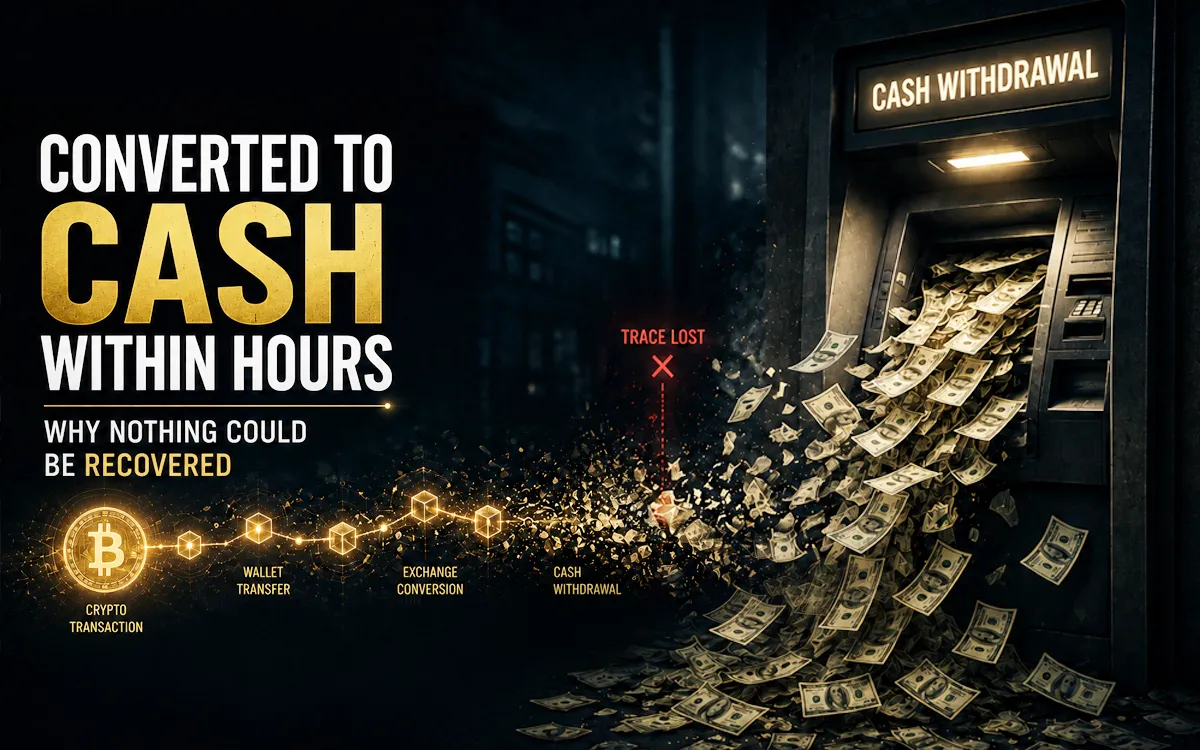

You try to withdraw your money, and suddenly everything stops. The request is marked as “pending.” Then comes the message. Before your funds can be released, you need to pay a fee.
It might be called:
- a processing fee
- a tax
- a verification charge
- a compliance or clearance cost
At first, it didn’t seem unusual. Fees are common in financial transactions. And when your balance is already showing profits, paying a smaller amount to unlock it can feel like a logical step.
But here’s the reality. You’re being asked to pay money to access your own money.
One of the most widespread tricks of the fake brokers in 2026 is the withdrawal fee scam. The sites are created to appear credible, present counterfeit gains, and gain credibility as time passes by. However, the second you attempt to back off, the rules are altered.
Further delays, new charges, and growing pressure follow, without any real payout.
Here, you will know how such scams operate, what to watch out for, and what to do in case your withdrawal is already blocked.
What Is a Withdrawal Fee Scam?
Financial fraud, a withdrawal fee scam, is a scheme involving financial services in which a bogus broker or entity will freeze your withdrawal and request a fee before releasing your money.
The demand is most often expressed as a common necessity. The reason could be that the fee is required to process, comply with taxes, verify, or clear regulatory requirements.
But in reality, the goal is simple. Get you to send more money. These scams often appear legitimate because:
- the platform looks professional
- your account shows profits
- communication feels structured and official
The problem starts when you try to withdraw.
Instead of processing your request, the platform introduces a condition. You must pay a fee first. Once that payment is made, another requirement appears. Then another.
This is a classic pattern seen in advance fee scam tactics used in financial and investment fraud, where victims are repeatedly asked to pay without ever receiving their funds.
Legitimate brokers do not operate this way. Fees, if any, are clearly disclosed upfront and deducted directly, not demanded separately before releasing your money.
If you’re being asked to pay before a withdrawal is processed, it’s a major warning sign. If this matches your situation, our withdrawal scam recovery service can help you understand what happened and what options exist.
How Fake Brokers Trap You (Step-by-Step)
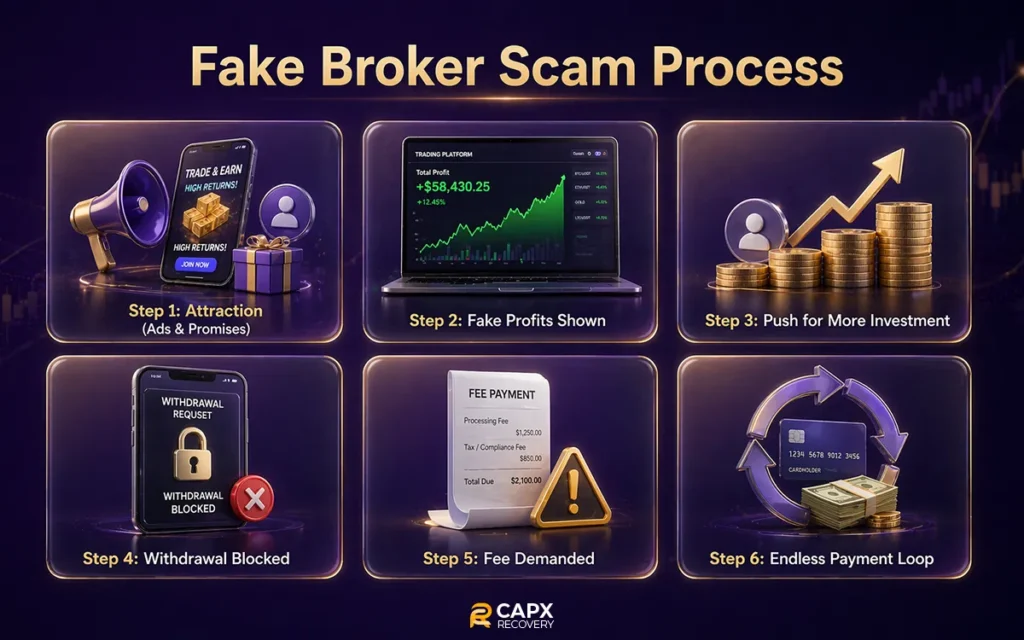
Withdrawal fee scams don’t happen all at once. They follow a structured pattern designed to build trust first, then block your exit when it matters most.
Here’s how it typically plays out:
Step 1: Attraction
You come across an investment opportunity through ads, social media, or direct messages. The platform looks professional, and the returns sound promising.
Sometimes, you’re guided by a “broker” or account manager who seems helpful and responsive.
Step 2: Fake Profits
After your initial deposit, your account starts showing profits. The dashboard looks real, with charts, balances, and transaction history.
In some cases, you may even be allowed a small withdrawal early on. This builds confidence and makes the platform feel legitimate.
Step 3: Increased Investment
As trust grows, you’re encouraged to deposit more. The messaging becomes more persuasive, highlighting higher returns and limited-time opportunities.
Because you’ve already seen “results,” it feels safe to continue.
Step 4: Withdrawal Blocked
The moment you try to withdraw a larger amount, things change.
Your request is delayed, marked as pending, or suddenly restricted. You’re told there’s an issue that needs to be resolved before funds can be released.
Step 5: Fee Demand
This is where the trap becomes clear. You’re asked to pay a fee. It may be labeled as:
- tax
- processing charge
- verification fee
- compliance requirement
The amount often seems small compared to your balance, making it easier to justify.
Step 6: Repeated Payments
After you pay, the process doesn’t end. New fees appear. Each one is presented as the final step. But the withdrawal never actually happens.
This is the same pattern seen in crypto tax scam and withdrawal fee scams that block access to your funds, where victims are kept in a loop of payments without resolution.
At every stage, the goal is the same. Keep you engaged, build trust, and delay the moment you realize the money was never accessible in the first place.
Types of Fake Withdrawal Fees You’ll See
Once your withdrawal is blocked, the platform introduces fees that sound legitimate but are designed to extract more money.
These charges often come one after another, each presented as necessary before your funds can be released.
Here are the most common ones:
Withdrawal Processing Fee
You’re told there’s a standard fee required to process your withdrawal request. This is often the first demand and is positioned as routine.
Tax or Clearance Fee
The platform claims you must pay a tax before your funds can be released. This is one of the most common tactics, especially in larger withdrawal amounts.
Verification Fee
You’re asked to complete an account or identity verification through a payment. This is framed as a compliance requirement.
Liquidity or Unlock Fee
In some cases, you’re told your funds are “locked” and require a fee to unlock or release them.
AML or Compliance Fee
The request is positioned as part of anti-money laundering or regulatory procedures, making it sound official and urgent. These fees can range from small amounts to a significant percentage of your account balance. And once one is paid, more often follows.
This pattern closely mirrors advanced fee scam tactics used in financial and investment fraud, where each payment is presented as the final step but never actually leads to a successful withdrawal.
If you’re being asked to pay any of these fees before accessing your funds, it’s a strong indication that you’re dealing with a scam.
Why These Scams Work So Well
Withdrawal fee scams are effective because they don’t feel like scams at first.
They’re designed to look like normal financial processes, which makes it easier for people to trust what’s happening.
Here’s why they work:
Authority
When a fee is labeled as a tax, compliance requirement, or regulatory charge, it carries weight. Most people don’t question something that sounds official.
Urgency
You’re told that delays could result in penalties, account suspension, or loss of funds. This pressure pushes for quick decisions without proper verification.
Trust in the Platform
The platform looks real. It shows profits, charts, and transaction history. You may have already interacted with a broker or account manager, which builds confidence.
Sunk Cost Effect
You’ve already invested money. You’ve seen “profits.” Paying a smaller fee to unlock a larger amount feels like a logical decision. This is exactly how social engineering scams manipulate victims into urgent decisions. The setup is designed to feel real, time-sensitive, and difficult to challenge.
Once these factors combine, even experienced individuals can find themselves making payments they wouldn’t normally consider.
Red Flags of Fake Brokers (2026)
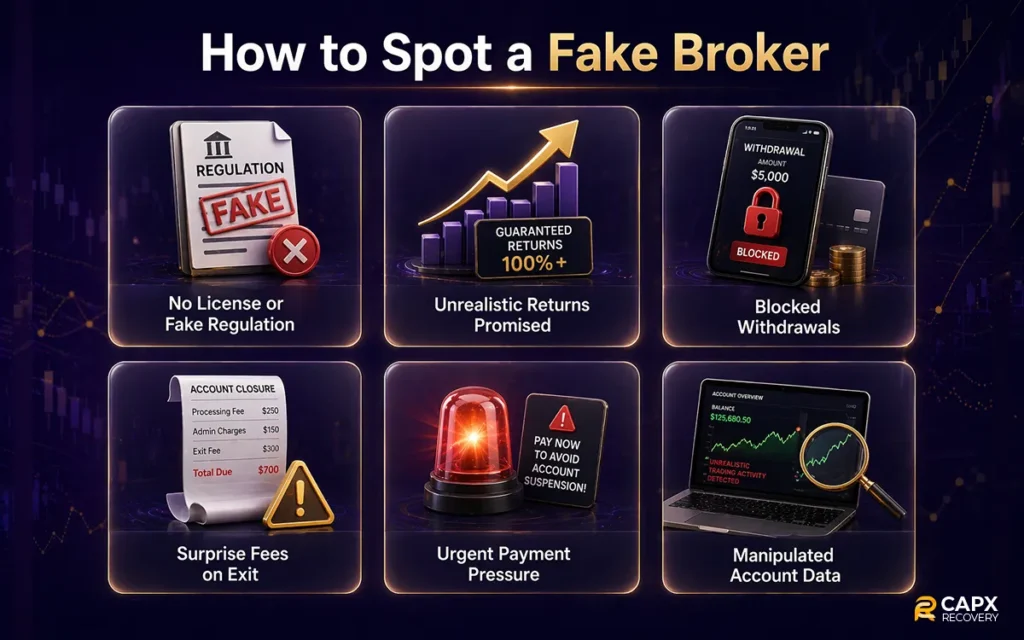
Fake brokers don’t always look suspicious at first. Many of them are designed to appear legitimate, which is why it’s important to know the warning signs.
Here are the key red flags to watch for:
1. No Regulation or Fake Licensing
The platform claims to be regulated, but there’s no verifiable license, and the details don’t match official records.
2. Guaranteed Profits or Low Risk Claims
Any platform promising consistent returns with little or no risk should raise immediate concern.
3. Withdrawal Issues or Delays
Your withdrawal requests are delayed, marked as pending, or blocked without a clear explanation.
4. Unexpected Fees
New charges appear only when you try to withdraw, often labeled as taxes, processing fees, or compliance costs.
5. Pressure to Act Quickly
You’re pushed to make payments immediately to avoid losing access to your funds.
6. Fake Dashboard or Manipulated Data
The platform shows profits, but they aren’t real. Everything is controlled to keep you engaged.
These red flags often appear together, not in isolation. If you notice more than one, it’s a strong indication you’re dealing with a fraudulent platform. Recognizing these early can help you avoid getting pulled deeper into a withdrawal fee scam. You can also read our full guide on how to identify a fake trading platform for a deeper breakdown of verification steps before you invest.
What to Do If Your Withdrawal Is Blocked
If your withdrawal has been blocked and you’re being asked to pay a fee, the most important thing is to pause and not act under pressure.
Here’s what you should do:
1. Do not send any more money
Even if the amount seems small or “necessary,” avoid making additional payments. This is how the scam continues.
2. Stop engaging with the platform
If the responses become repetitive, vague, or pushy, disengage. Continued communication is often used to increase pressure.
3. Collect and secure all evidence
Save everything:
- emails and messages
- transaction records
- screenshots of your account
- payment confirmations
This information is critical if you decide to take further action.
4. Secure your accounts
Change passwords, enable two-factor authentication, and review your financial accounts for any unusual activity.
5. Seek guidance early
If you’re unsure about the situation or have already made a payment, getting clarity early can help you avoid further loss.
In many cases, these situations follow the same pattern as advance fee scam tactics used in financial and investment fraud, where victims are repeatedly asked to pay without ever receiving their funds.
Acting early helps you stay in control and prevents the situation from escalating further.
How Capx Recovery Helps in Withdrawal Fee Scams
When you’re dealing with a blocked withdrawal and repeated fee demands, it can be difficult to know what’s real and what isn’t. This is where Capx Recovery steps in.
The focus is not just on identifying the scam, but on taking structured steps toward resolving the situation and, where possible, recovering your funds.
Here’s how the process works:
1. Case Assessment
The first step is understanding your situation in detail. This includes reviewing platform activity, communication, and payment requests.
The goal is to determine whether the withdrawal issue is legitimate or part of a scam.
2. Evidence Collection
All relevant information is gathered, including:
- transaction records
- emails and messages
- platform screenshots
- payment confirmations
This builds a clear picture of what happened.
3. Scam Pattern Analysis
Capx Recovery analyzes the case to identify patterns commonly seen in withdrawal fee scams. This helps confirm whether the platform is operating fraudulently.
4. Recovery Strategy
Based on the findings, a tailored recovery approach is developed. This may involve working through financial channels, dispute processes, or other appropriate steps, depending on the case.
5. Ongoing Guidance
You’re guided throughout the process, including what actions to take next and what to avoid. This helps prevent further losses and keeps everything structured.
Withdrawal fee scams are designed to confuse and pressure victims. Having a clear process makes it easier to step back, understand the situation, and take informed action.
How to Protect Yourself from Fake Brokers
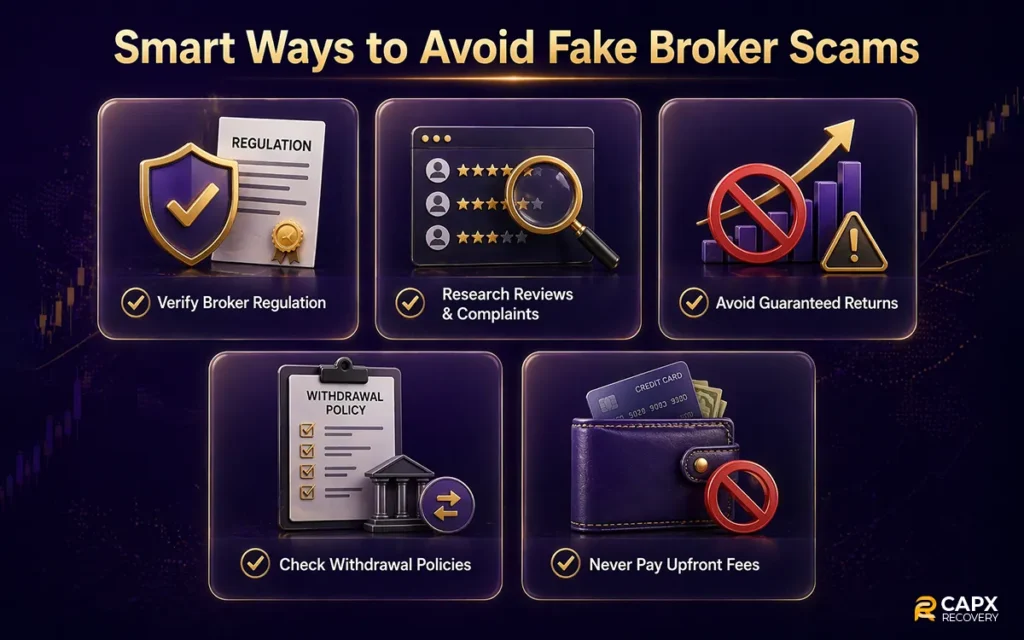
Avoiding withdrawal fee scams starts with being cautious before you invest, not after the problem appears.
Here are simple ways to protect yourself:
Verify regulation and licensing
Always check if the broker is properly regulated by official financial authorities. Don’t rely on claims made on the platform itself.
Research the platform before investing
Look for independent reviews, complaints, and real user experiences. A lack of information or too many positive reviews can both be warning signs.
Be cautious of guaranteed returns
No legitimate platform can promise consistent profits with low risk. This is one of the most common tactics used to attract victims.
Avoid platforms that control withdrawals
If a platform makes it difficult to withdraw funds or introduces conditions after the fact, it’s a major red flag.
Question any upfront fee requests
You should never be required to pay a fee to access your own money. This is a key indicator of a withdrawal fee scam.
Many of these cases are connected to broader fraud patterns, including fake tax and withdrawal fee scams that block access to your funds. Recognizing these early can help you avoid getting trapped.
Staying alert doesn’t mean avoiding all opportunities. It simply means verifying before trusting.
Take Action Before It’s Too Late
Withdrawal fee scams are designed to keep you stuck. They rely on delays, pressure, and the hope that you’ll keep paying just one more fee to access your money.
Here’s what to remember:
- You should never have to pay to withdraw your own funds
- Legitimate platforms do not introduce unexpected fees after the fact
- Repeated payment requests are a clear warning sign
When you are not able to withdraw or when someone is requesting that you pay extra fees, do not ignore it and wait. The more time you have to wait, the more difficult it is to do anything substantial.
When you have already sent money or when you are under pressure to make a payment, it is possible to do something about it. Capx Recovery allows you to evaluate your case, find patterns of fraudsters, and take the necessary steps to secure your money and search for potential recovery opportunities.
FAQ
Is it normal to pay a fee before withdrawing funds?
No. Legitimate platforms do not require upfront payments to process withdrawals. Fees, if any, are usually deducted automatically, not requested separately.
Why do fake brokers keep asking for multiple fees?
This is a common tactic used to keep victims engaged. Each payment is presented as the final step, but new charges continue to appear without any actual withdrawal.
Can I recover money lost to a withdrawal fee scam?
In some cases, recovery may be possible depending on how the payment was made and how quickly action is taken. Seeking guidance early improves the chances.
How can I identify a fake broker?
Look for warning signs such as lack of regulation, guaranteed profits, withdrawal issues, unexpected fees, and pressure to act quickly.
What should I do if my withdrawal is blocked?
Do not send more money. Stop communication, collect evidence, secure your accounts, and seek guidance as early as possible