Online trading scams aren’t slowing down. If anything, they’re getting smarter. In 2026, fake brokers will no longer just disappear with deposits. They’re running a more calculated play: letting victims believe they’ve made profits, then blocking withdrawals unless a so-called “fee” is paid first.
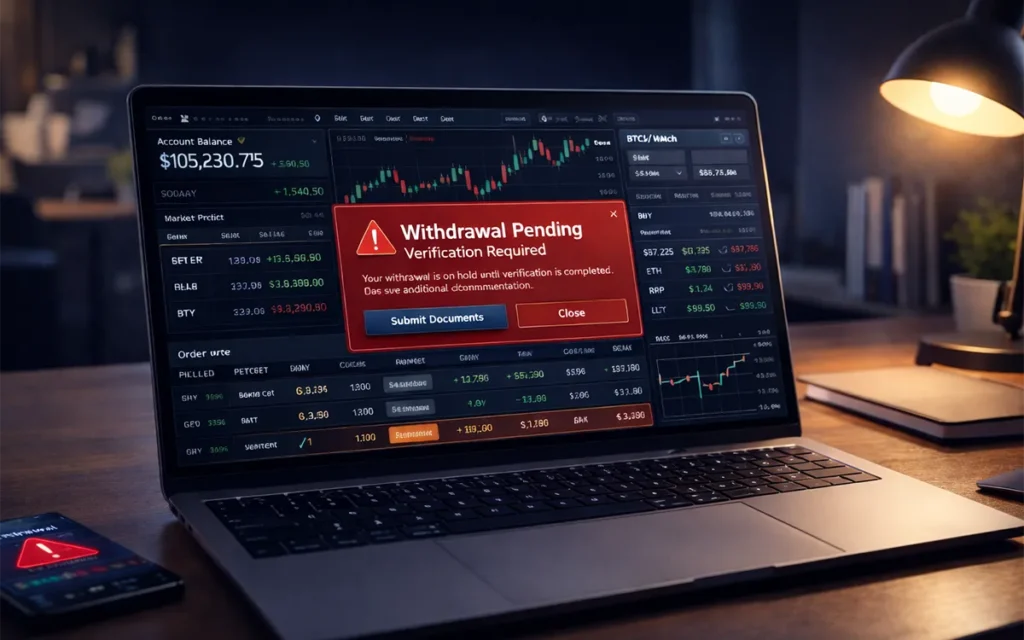
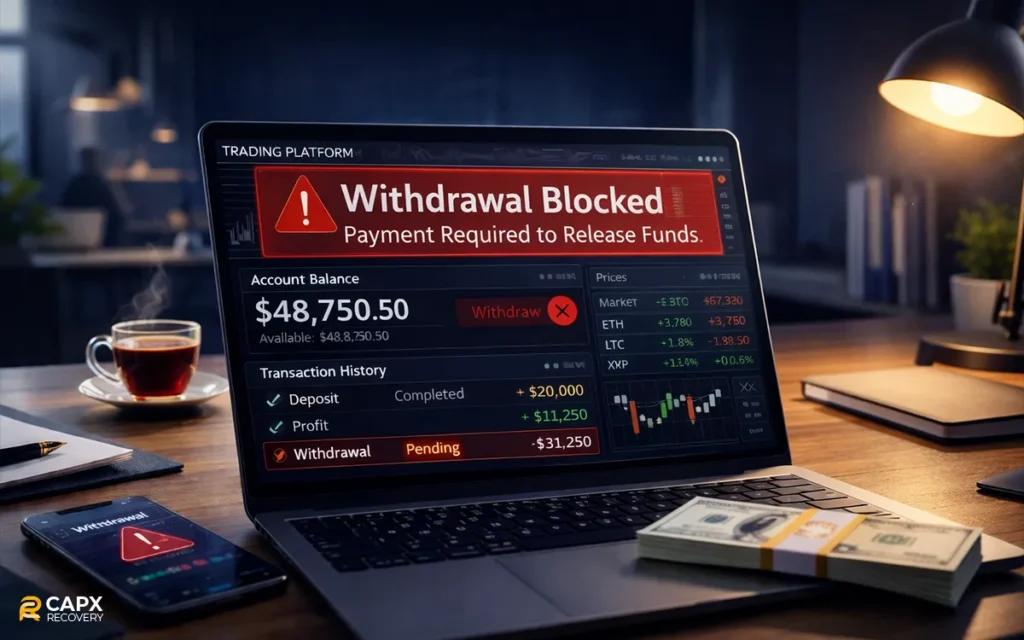
It usually starts with a professional-looking trading platform. You invest. Your account balance grows. Everything feels legitimate. But the moment you try to withdraw your funds, the trap closes. You’re told to pay a withdrawal fee, a tax charge, a compliance cost, or a security deposit. Pay it, they say, and your money will be released.
It won’t.
This is the withdrawal fee scam. And it’s costing victims millions every year across crypto, forex, binary options, and CFD trading platforms.
In this guide, you’ll see exactly how the scam works, why it’s spreading again in 2026, the warning signs most people miss, and what to do immediately if you’ve already been targeted.
What is a Withdrawal Fee Scam?
A withdrawal fee scam is a type of investment fraud where a fake broker refuses to release your money unless you pay an additional upfront charge.
Here’s how it usually plays out.
You sign up on a trading platform that looks legitimate. The website is polished. The dashboard shows real-time charts. You deposit funds, often starting small. Soon, your account balance begins to grow. The platform may even assign you a “personal account manager” who encourages you to invest more.
- Then you decide to withdraw.
- That’s when the excuses begin.
You’re told there’s a required withdrawal fee. Or a tax clearance payment. Or a compliance charge. Sometimes it’s called a liquidity fee or security verification deposit. The reason changes, but the structure stays the same: you must pay first to access your own money.
Once you send the payment, one of two things happens:
- They invent another fee
- They stop responding entirely
The key detail is this: legitimate brokers deduct fees from your balance. They do not ask you to send more money separately to unlock a withdrawal.
Legitimate Broker vs Scam Broker
| Feature | Legitimate Broker | Scam Broker |
| Fee disclosure | Clearly listed in terms | Revealed only at withdrawal |
| Withdrawal process | Automatic after request | Blocked until the fee is paid |
| Fee structure | Deducted from the balance | Demands separate payment |
| Regulation | Verifiable license | Fake or unverified claims |
| Customer support | Consistent and traceable | Disappears under pressure |
The withdrawal fee scam works because victims already believe they’ve made profits. When someone thinks they’re unlocking a large payout, paying a smaller “processing fee” feels reasonable.
That psychological pressure is exactly what scammers rely on.
Why Withdrawal Fee Scams Are Growing in 2026
Withdrawal fee scams are not new. What’s changed is how polished and scalable they’ve become.
Investment fraud continues to rank among the highest-loss scam categories in the United States. In recent years, Americans have reported billions of dollars lost to crypto and online trading schemes. A large share of those losses come from fake platforms that simulate profits before blocking withdrawals.
Several trends are fueling the rise in 2026:
1. Crypto Still Attracts First-Time Investors
Crypto markets remain volatile but popular. New investors enter through social media hype, AI trading claims, and “exclusive” investment groups. Scammers position fake brokers as easy entry points.
2. Pig Butchering Tactics Are More Sophisticated
Fraudsters build trust over weeks or months. They may connect through dating apps, LinkedIn, Telegram groups, or WhatsApp chats. By the time a withdrawal fee appears, the victim already trusts the person guiding them.
3. AI-Generated Trading Dashboards
Fake platforms now look nearly identical to legitimate exchanges. Real-time charts, profit notifications, and even customer service bots make everything feel authentic.
4. Mobile-First Scam Platforms
Many fraudulent brokers operate entirely through mobile apps or private web portals. That makes them harder to verify and easier to shut down and relaunch under new names.
5. Cross-Border Operations
Scam brokers often operate from jurisdictions where enforcement is difficult. They target victims globally, making recovery more complex.
The withdrawal fee scam works because it exploits hope. Victims believe their profits are real. Paying one more “required” fee feels like the final step before a big payout.
In reality, it’s just another stage of the fraud.
How Fake Brokers Trap Victims Step by Step
Most withdrawal fee scams follow a predictable pattern. Once you see the structure, it becomes easier to recognize.
Stage 1: The Hook
It often starts with an opportunity.
- A social media ad promising high crypto returns
- A message from someone claiming to be a trading mentor
- A connection through a dating app who “also invests”
- An invitation to a private Telegram or WhatsApp group
The pitch is simple: small deposit, high returns, limited-time opportunity.
The platform looks professional. It may even show fake licenses and regulatory logos to build credibility.
Stage 2: The Illusion of Profits
After your first deposit, your account balance grows quickly. You might see:
- Daily profit updates
- Screenshots of other users earning money
- Encouragement to upgrade to a VIP tier
- Bonuses that increase your “trading power”
At this stage, everything feels smooth. The broker responds quickly. Your account manager sounds confident. You’re encouraged to invest more to maximize returns.
Some victims even receive small early withdrawals to build trust.
Stage 3: The Withdrawal Block
The turning point comes when you try to withdraw a larger amount.
Suddenly, there’s a problem.
You’re told you must pay:
- A withdrawal processing fee
- A tax clearance charge
- A compliance verification fee
- A security deposit
- A liquidity release payment
The explanation sounds official. There may be fake documents attached. Sometimes they claim the fee is required by financial regulators.
The pressure increases:
- “If you don’t pay today, your account will freeze.”
- “This is the final step before payout.”
- “Your profits will expire.”
Once you pay, another fee often appears.
Stage 4: Disappearance
If you refuse to send more money, communication slows down. Then stops.
- Emails go unanswered
- Chat support disappears
- The website may go offline
- Your account access is revoked
By then, the scam is complete.
The entire operation was designed around one goal: extract as much money as possible before the victim realizes that withdrawals were never possible in the first place.
Red Flags That Expose a Scam Broker
Most withdrawal fee scams reveal themselves early. The problem is that victims often don’t know what to look for.
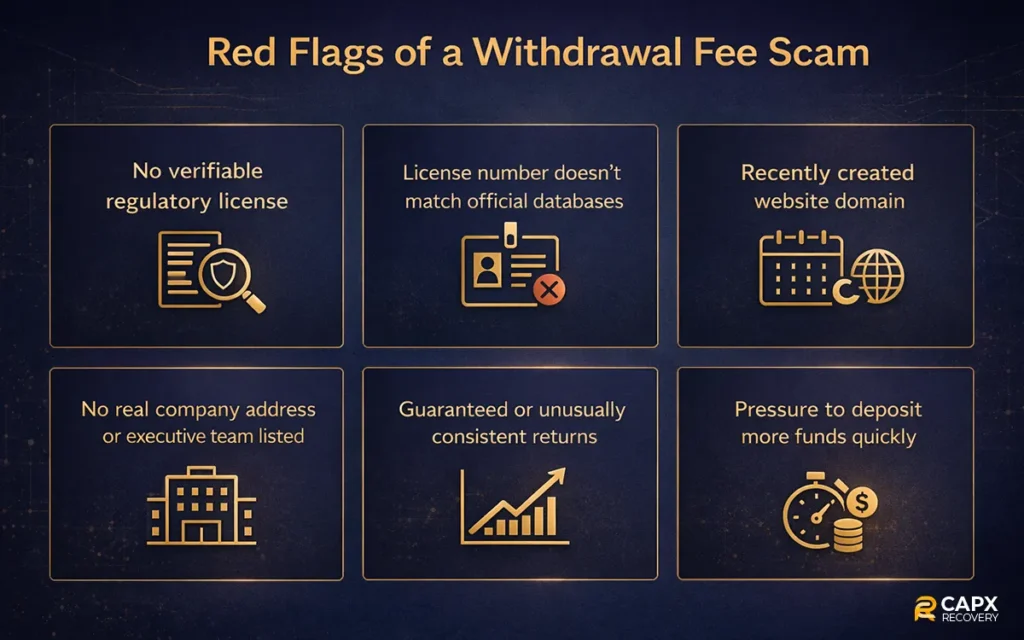
Here are the warning signs that should immediately raise concern.
Major Red Flags
- No verifiable regulatory license
- License number that doesn’t match official databases
- Recently created website domain
- No real company address or executive team listed
- Guaranteed or unusually consistent returns
- Pressure to deposit more funds quickly
- Requirement to pay a fee before withdrawing
- Account “frozen” until additional payment is made
One of the biggest giveaways is this: legitimate brokers deduct fees directly from your account balance. They do not ask you to wire, transfer, or send crypto separately to unlock your funds.
If someone says you must pay a tax, compliance charge, or release fee before accessing your own money, that’s not standard industry practice. It’s a control tactic.
Quick Verification Checklist
Before sending money to any broker, ask yourself:
- Can I independently verify their license with a real regulator?
- Is their domain older than a year?
- Are there credible third-party reviews outside their website?
- Are fee structures clearly documented in advance?
- Have other users reported withdrawal problems?
If even one of these answers raises doubt, pause immediately.
Scam brokers rely on urgency and emotional pressure. The moment you slow the process down and verify details independently, their model starts to fall apart.
What To Do If You’ve Paid a Withdrawal Fee
If you’ve already sent money, act quickly. Time matters more than anything else.
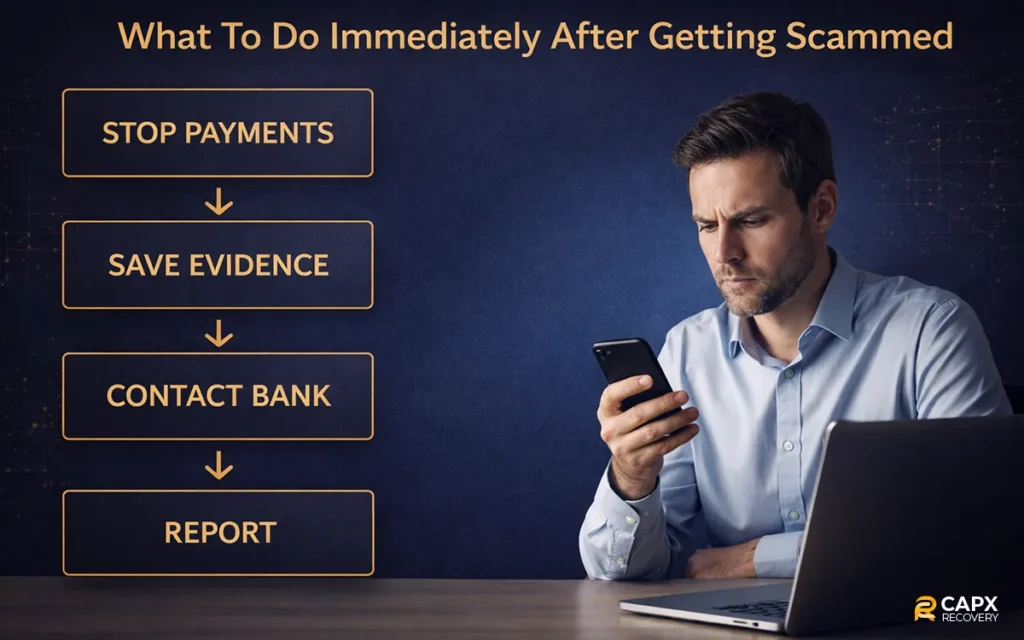
First, stop sending additional payments. No matter what they promise, paying another “release fee” will not unlock your funds. It only signals that you’re willing to keep paying.
Immediate Steps
- Stop communication temporarily so you can assess the situation clearly
- Save everything: screenshots, transaction IDs, wallet addresses, emails, chat logs
- Contact your bank or card provider immediately and ask about chargeback options
- Notify your crypto exchange if digital assets were involved
- Change passwords connected to financial accounts
- Report the incident to the relevant authorities
If you’re unsure where to start, learning what to do when you’ve been scammed can make all the difference. Most victims don’t realize straight away that the so-called “tax” or “verification payment” is part of a wider crypto withdrawal fee scam.
Why Acting Fast Helps
- Card payments may qualify for chargebacks if reported quickly
- Some crypto transactions can be traced before funds are fully laundered
- Early reporting increases the chance of freezing linked accounts
- Documentation strengthens any recovery effort
The most important shift is mental: stop negotiating with the scammer. Once a withdrawal fee appears, the platform is no longer a broker. It’s an extraction machine.
The next move should focus on containment and recovery, not trying to “unlock” profits that were never real.
Can You Recover Money from a Fake Broker?
Recovery depends on how the payment was made and how quickly you act.
There’s no universal guarantee. But in some cases, funds can be partially or fully recovered.
If You Paid by Credit or Debit Card
Card payments sometimes qualify for chargebacks, especially if reported quickly. Banks may investigate under fraud or misrepresentation claims. The sooner you report it, the stronger your case.
If You Paid by Bank Transfer
Wire transfers are harder to reverse, but rapid reporting can sometimes trigger recall attempts or fraud investigations. Timing is critical.
If You Sent Cryptocurrency
Crypto transactions are irreversible by design. That said, blockchain transactions are traceable. Skilled investigators can follow wallet movements, identify exchange endpoints, and sometimes coordinate with platforms where funds are cashed out.
Factors That Influence Recovery
- Time elapsed since payment
- Payment method used
- Quality of documentation
- Whether funds have reached centralized exchanges
- Cross-border jurisdiction issues
It’s important to avoid “recovery scammers” who promise guaranteed refunds for upfront fees. Legitimate recovery assistance focuses on investigation, documentation, and structured escalation, not unrealistic promises.
You can also see how broker-related recovery cases are handled in this breakdown of how funds are recovered from unreliable brokers. The earlier you act, the more options you have.
How to Protect Yourself from Withdrawal Fee Scams in 2026
Prevention is always easier than recovery. Scam brokers rely on urgency, excitement, and trust. If you slow things down and verify independently, most of these schemes fall apart quickly.
Here’s how to protect yourself.
1. Verify Regulation Directly
Never trust a license badge on a website. Go to the official regulator’s site and search the company names yourself. If the broker claims to be regulated but doesn’t appear in the database, walk away.
2. Test the Withdrawal Process Early
Before depositing large amounts, try withdrawing a small sum. Legitimate platforms process withdrawals without asking for additional external payments.
If a platform blocks even a small test withdrawal, that’s a major warning sign.
3. Never Pay to Unlock Your Own Money
There is no legitimate scenario where you must send extra funds separately to release your balance. Real brokers deduct fees directly from your account.
If someone demands a tax, compliance fee, or security deposit before withdrawal, stop immediately.
4. Research the Domain and Company History
Check:
- Domain age
- Company registration records
- Executive team presence
- Independent reviews
- Regulatory warnings
Newly created domains tied to investment platforms are high risk.
5. Avoid Unsolicited Investment Advice
Be cautious if someone you just met online introduces a trading opportunity. This is especially common in romance-based investment scams.
Quick Safety Checklist
- Use two-factor authentication
- Keep trading accounts separate from primary banking
- Don’t share ID documents with unverified platforms
- Ignore “limited time” investment pressure
- Trust verification over testimonials
The pattern is simple: if profits look effortless and withdrawals require extra payments, you’re not investing. You’re being set up.
Spot the Pattern Before It Costs You
Withdrawal fee scams don’t start with obvious fraud. They start with hope. A promising platform. A growing balance. A sense that you made a smart move.
The trap only becomes visible when you try to withdraw.
By then, the scammer is counting on two things: that you believe the profits are real, and that paying one more fee feels worth the payout. That’s the psychological pressure point.
The reality is simple. Legitimate brokers do not charge surprise fees to unlock your own money. They do not require separate payments for tax clearance or compliance verification. And they do not freeze accounts until you send more funds.
If you recognize the signs early, you can avoid becoming another statistic. If you’ve already been targeted, quick action through cryptocurrency recovery services can improve your chances of limiting the damage.
Scam platforms may evolve, but the structure stays the same. Once you understand how the withdrawal fee scam works, it becomes much harder to fall for it again.
FAQ
What is a “release fee” in trading scams?
A release fee is a fabricated charge used by fake brokers to block withdrawals. It may be labeled as a tax payment, compliance verification, liquidity fee, or security deposit. In scam cases, it has no legal or regulatory basis and is simply a tactic to extract more money.
Why do fake brokers show profits before blocking withdrawals?
Displaying fake profits builds trust and emotional investment. When victims believe they’ve earned significant returns, paying a smaller “withdrawal fee” feels reasonable. The profits are usually simulated inside a controlled dashboard, not generated through real trading.
Can you recover money lost to a withdrawal fee scam?
Recovery depends on how you paid and how quickly you act. Credit and debit card payments may qualify for chargebacks. Bank transfers are harder to reverse but should be reported immediately. Cryptocurrency transactions are not reversible, but blockchain tracing can sometimes identify where funds were moved.
How can I check if a broker is legitimate?
Verify the broker’s license directly through the official regulator’s website. Check the domain age, company registration details, independent reviews, and withdrawal policies. If a platform requires extra payments before releasing your money, that’s a major red flag.