
Telegram feels more private than most platforms. Conversations happen in closed spaces, groups move fast, and interactions don’t sit in public feeds. That makes it useful, but it also makes it easy to misuse.
Scammers take advantage of that environment. Instead of approaching you openly, they reach out through DMs, group invites, or bots. The message usually feels personal, like an investment tip, a job offer, or access to something “exclusive.”
At first, nothing seems suspicious.
That’s how Telegram scams work. They build trust quietly, then push you to act before you’ve had time to question it. By the time something feels wrong, the damage is often already done often following patterns seen in broader crypto fraud, investment scams, and social engineering tactics.
This blog breaks down the most common Telegram scams in 2026, how they actually work, and the warning signs people often miss. You’ll also learn practical ways to spot red flags early, protect yourself, and know what steps to take if you’ve already been targeted.
This works because it quickly sets expectations, adds audience value, and naturally improves engagement after the intro.
Why Telegram Is a Hotspot for Scams
Telegram makes it easy to connect and just as easy to stay anonymous.
You don’t need much information to interact with someone. Usernames replace identities, and accounts can be created quickly. That lowers friction for everyone, including scammers who rotate profiles often.
Groups and channels add another layer. Large member counts and active chats create instant credibility, even when much of it is fake or staged. It feels like you’re part of something trusted.
Then there’s speed. Conversations move quickly, and there’s less visible moderation compared to public platforms. The pace makes it easier to apply pressure and harder to pause and verify.
In short, Telegram combines privacy, scale, and speed, exactly what scams need to spread.
How Telegram Scams Work (Step-by-Step)
Most Telegram scams follow a predictable pattern. The details change, but the structure stays surprisingly consistent.
1. Initial Contact
It starts with a DM, a group invite, or a message from a bot. Sometimes it looks random, sometimes it feels targeted. Either way, the goal is simple – get your attention without raising suspicion.
2. Building Trust
This is where things slow down a bit. The scammer may act helpful, professional, or even friendly. In groups, you’ll often see staged conversations people “confirming” payouts or sharing success stories. It creates the illusion that others are already benefiting.
3. Introducing The Opportunity
Once you’re comfortable, the pitch appears. It could be a crypto trade, a job, an exclusive deal, or early access to something “limited.” The language is usually confident and specific enough to sound real, but vague enough to avoid scrutiny.
4. Showing Proof
Screenshots, dashboards, transaction logs – whatever fits the story. None of it is hard to fake, but in the moment, it feels convincing, especially when paired with group validation.
5. The Ask
This is the turning point. You’re asked to deposit funds, pay a fee, connect a wallet, or share login details. It often comes with urgency “spots are filling,” “withdraw now,” “last chance.”
6. Exit Or Escalation
Once money or access is given, one of two things happens. Either the scammer disappears, or they keep the interaction going asking for additional fees, taxes, or “unlock charges.” This can repeat until the victim stops paying.
If this flow feels familiar, it’s because it mirrors other scams especially investment and romance setups. The only difference is speed. On Telegram, the entire cycle can play out much faster.
This pattern closely resembles “pig butchering” scams, in which fraudsters gradually build trust with victims before encouraging them to commit larger sums of money.
Types of Telegram Scam
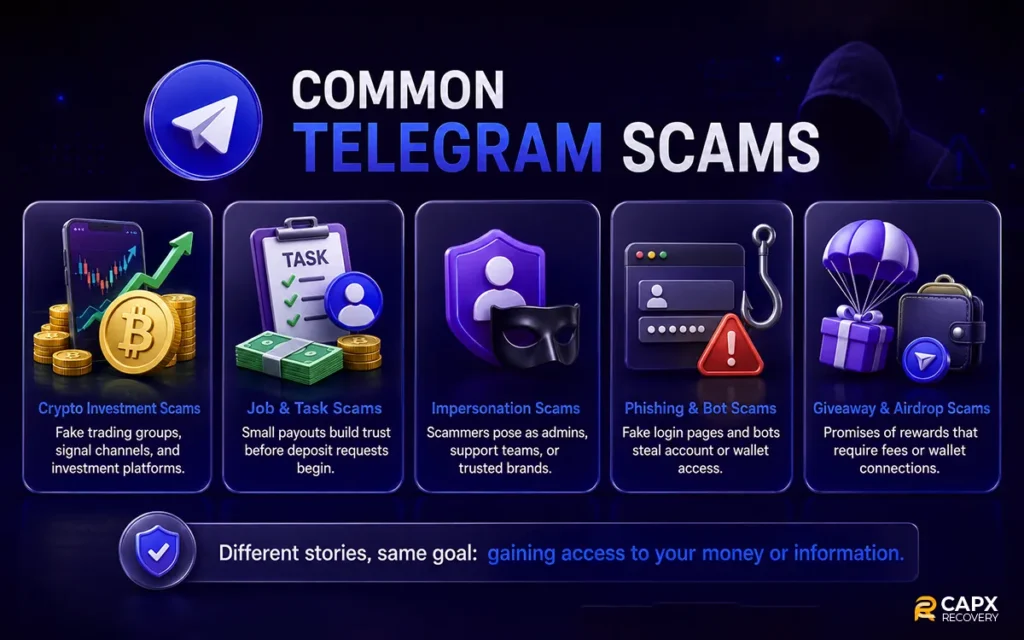
Once you know the pattern, the different scam types start to feel less random. They’re just variations of the same playbook, dressed up for different audiences.
1. Crypto Investment Scams
These are everywhere on Telegram. You’ll see “signal groups,” private trading channels, or direct messages claiming insider access.
It usually starts with small wins or at least the illusion of them. Screenshots show profits. Group members celebrate gains. It feels active and credible.
Then comes the shift:
You’re asked to invest more, move funds to a specific platform, or follow trades that only work inside their system. That’s where the trap is. The platform is fake, the trades aren’t real, and withdrawals either get blocked or require endless fees.
Many of these setups overlap with tactics used in crypto romance scams. Understanding how crypto romance scams work can help reveal how fraudsters combine fake relationships with seemingly legitimate investment opportunities to build trust and persuade victims to invest money.
2. Job & Task Scams
These feel harmless at first. Simple tasks, easy money no experience needed.
And sometimes, they actually pay you in the beginning. A small amount, just enough to build confidence.
Then the rules change.
To “unlock higher earnings” or continue tasks, you need to deposit money. From there, it turns into a loop each payment leads to another requirement. The early payout is just bait.
3. Impersonation Scams
Here, the scammer doesn’t sell you something they position themselves as someone you already trust.
It could be a Telegram group admin, a customer support agent, or a known brand. They reach out first, often claiming there’s an issue with your account or a pending action.
The goal is to get you to share sensitive details or make a payment under the impression that you’re fixing a problem.
4. Phishing & Bot Scams
These rely on links rather than conversations.
You’re asked to log in, verify, or claim something through a bot or external page. The interface often looks identical to real services wallets, exchanges, even Telegram itself.
Once you enter your details, access is gone. Accounts get taken over, wallets get drained, and recovery becomes difficult.
5. Giveaway / Airdrop Scams
This one plays on excitement.
- “Send a small amount, get more back.”
- “Connect your wallet to claim rewards.”
- “Limited-time airdrop for early users.”
It sounds simple, and that’s why it works.
There’s always a catch: a fee, a connection, or a verification step that gives the scammer access. The promised reward never arrives.
Across all these types, one thing stays consistent:
They don’t look like scams in the beginning. They look like opportunities.
Red Flags to Watch For
Telegram scams rely on you moving fast. If you slow down, the warning signs are usually obvious.
Watch for unsolicited messages offering jobs, investments, or deals. Legitimate opportunities rarely start in random DMs.
Be cautious of urgency “act now,” “limited slots,” “last chance.” Pressure is used to stop you from verifying.
Guaranteed returns are another major red flag. No real investment promises consistent profit without risk.
Avoid clicking unknown or shortened links, especially those asking you to log in or connect a wallet.
And most importantly, question any payment request that doesn’t make sense fees to withdraw, deposits to start earning, or charges to claim rewards.
These scams don’t rely on one obvious lie. They rely on you not pausing long enough to connect the dots.
Why People Fall for Telegram Scams
Telegram changes how interactions feel. Conversations are private, so there’s no outside input to challenge what you’re being told. That alone lowers skepticism.
There’s also a sense of exclusivity, private groups, insider access, limited opportunities. It makes people feel like they’re getting something others don’t.
Add social proof, where others appear to be earning or benefiting, and it becomes easier to trust the setup.
Then comes the gradual build. Nothing feels risky at first just small steps that seem harmless.
By the time money or access is involved, you’re already somewhat invested.
This slow, deliberate trust-building process is often seen in romance scams, where scammers invest significant time in creating an emotional connection before bringing money into the conversation. Understanding these patterns can help people identify the warning signs of romance scams before financial losses occur.
What to Do If You’re Targeted
If something feels off, don’t stay in the conversation trying to figure it out. Exit early.
Stop responding. Scammers rely on keeping you engaged. The longer you stay, the easier it is for them to pull you back in.
If you haven’t sent money, don’t start. If you already have, don’t send more even if they promise recovery or withdrawals after another payment.
Next, secure your accounts. Change passwords, enable two-factor authentication, and review recent activity especially if you clicked any links.
Report the account inside Telegram to flag it.
If money is involved, save everything: chat history, usernames, wallet addresses, transaction IDs. Acting quickly won’t guarantee recovery, but it can limit further damage.
Telegram scams move fast, and figuring out what to do next can feel overwhelming especially when money, crypto, or account access is involved. That’s where professional guidance can help bring structure to the situation instead of reacting based on panic or guesswork.
How Capx Recovery Helps

After a Telegram scam, most people are left guessing what to do next. You might have screenshots, a wallet address, maybe a transaction but no clear direction.
Capx Recovery focuses on making sense of the situation first.
They start with a case review, breaking down how the scam happened and what type it was. From there, they look at transaction flow, especially in crypto cases where funds move across multiple wallets.
The goal isn’t false promises. It’s clarity what can be traced, what options exist, and what steps are actually worth taking.
You also get help with organizing evidence if you plan to report the case or escalate it further.
Instead of reacting blindly, you’re working with a structured approach based on how these scams actually operate.
How to Stay Safe on Telegram
Staying safe on Telegram comes down to slowing things down.
Avoid engaging with unknown contacts, especially those offering money or opportunities. Be cautious with large groups activity and member count don’t equal credibility.
Always verify identities outside the chat if someone claims to be support, an admin, or part of a company.
Never share passwords, OTPs, or private keys no legitimate service will ask for them.
And if something feels rushed or unusually profitable, pause. Most scams depend on speed. Breaking that pace is often enough to avoid them.
FAQ
Are Telegram scams common in 2026?
Yes. Telegram scams have increased due to the platform’s privacy features, fast communication, and large group networks, which make it easier for scammers to operate.
How do Telegram scammers contact you?
They usually reach out through direct messages, add you to groups, or use bots. Some also impersonate admins or support accounts to appear trustworthy.
What is the most common Telegram scam?
Crypto investment scams and job/task scams are among the most common. Both often start with small wins or promises and later require deposits or fees.
Can Telegram accounts be hacked?
Yes, but usually through phishing. Scammers trick users into sharing login codes, clicking fake links, or connecting wallets, rather than hacking the platform directly.
Are Telegram crypto groups safe?
Not always. Many are used to create fake credibility with staged messages and profit screenshots. Any group promising guaranteed returns should be treated as suspicious.
What should I do if I get a scam message on Telegram?
Do not respond or click links. Block and report the account on Telegram, and secure your account if you shared any information.
Can you recover money lost in a Telegram scam?
Recovery depends on the situation, especially the payment method used. In some cases, tracing and reporting can help, but recovery is not guaranteed.