
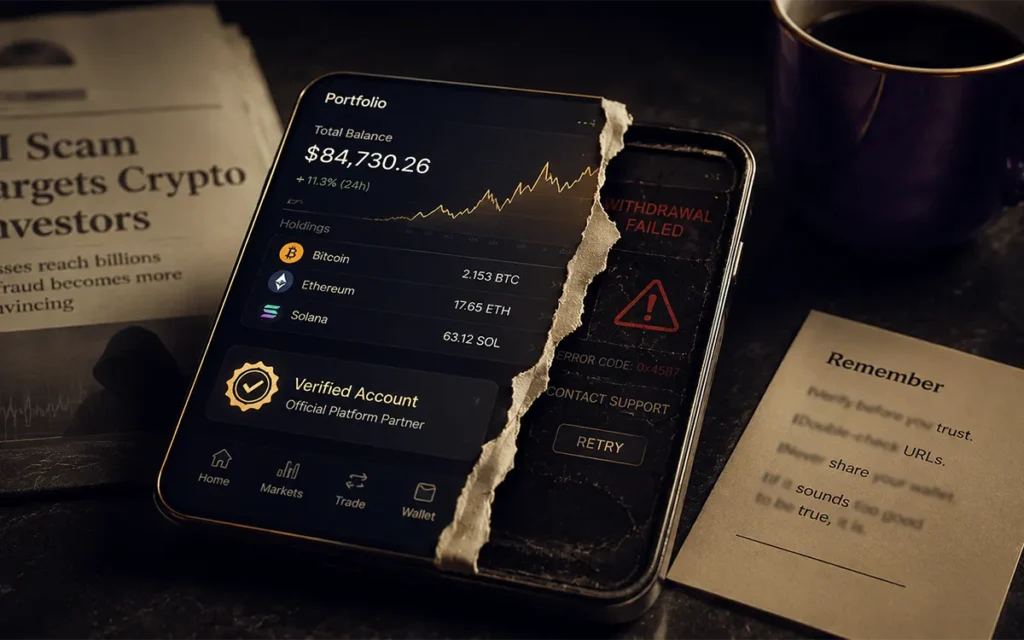
Crypto scams aren’t new. What’s changed in 2026 is how convincing they’ve become.
Scammers are now using artificial intelligence to create fake investment videos, clone voices, write realistic messages, and even build professional-looking crypto platforms. Instead of obvious red flags, many victims are dealing with polished websites, believable conversations, and personalized investment pitches designed to build trust quickly.
The risk is growing alongside technology. According to fraud warnings from consumer protection agencies and blockchain intelligence firms, scammers are increasingly using AI-generated content to make investment fraud harder to detect, especially in high-risk areas like cryptocurrency. Recent reports from agencies such as the FTC and blockchain analytics firms have also warned about rising crypto-related fraud and impersonation tactics.
What are AI crypto scams?
AI crypto scams are cryptocurrency fraud schemes where scammers use artificial intelligence tools, such as deepfake videos, voice cloning, fake chat support, or personalized phishing messages, to trick people into sending money or revealing sensitive information. These scams are designed to look more realistic and trustworthy than traditional fraud.
In a traditional crypto scam, you might receive a generic message promising guaranteed returns. In an AI-powered scam, the experience can feel far more convincing. You may see what looks like a trusted public figure promoting an investment, receive a professional-sounding call from someone claiming to represent a crypto exchange, or chat with an “advisor” that responds naturally and confidently.
The goal hasn’t changed; scammers still want access to your money. What has changed is how convincing the deception has become. If someone has already lost funds through one of these schemes, understanding the options for crypto investment scam recovery can help them take informed next steps while reporting the fraud to the appropriate authorities.
Why AI Is Making Crypto Scams More Dangerous

Artificial intelligence hasn’t created crypto scams; it has changed how persuasive and scalable they can become. Cybersecurity researchers and fraud monitoring firms have increasingly warned that AI tools now allow scammers to imitate real people, automate outreach, and create highly believable investment schemes at scale.
In the past, scam messages were often easier to spot. Poor grammar, suspicious websites, and unrealistic claims made many fraud attempts obvious. Today, AI allows scammers to create polished content, realistic conversations, and believable identities that can lower suspicion.
Scams Feel More Personal and Convincing
AI helps scammers create messages that feel tailored instead of generic.
Rather than sending the same script to everyone, fraudsters can personalize conversations based on someone’s interests, social media activity, or investing behavior. A casual message about crypto may slowly turn into an investment recommendation that feels genuine.
This kind of trust-building makes scams harder to recognize.
AI Helps Scammers Target More Victims Faster
Scammers can now automate outreach, generate multilingual content, and create thousands of personalized messages at scale.
Instead of manually targeting a few people, a single scam operation can test different investment pitches and fake identities across platforms to see what works best.
Deepfakes and Voice Cloning Build False Trust
One of the biggest shifts in 2026 is the rise of deepfake videos and cloned voices.
Scammers can create fake endorsements, impersonate company representatives, or mimic trusted voices to make investment opportunities appear legitimate. A familiar face or voice naturally lowers skepticism, and scammers use that to their advantage.
| Traditional Crypto Scam | AI-Powered Crypto Scam |
| Generic mass messages | Personalized conversations |
| Limited manual targeting | Automated large-scale targeting |
| Basic impersonation | Deepfakes and voice cloning |
| Easier to detect | More realistic and harder to verify |
Most Common Types of AI Crypto Scams in 2026

AI-powered crypto scams come in different forms, but most follow the same pattern: build trust, create urgency, and convince victims to send cryptocurrency before they realize something is wrong.
Here are the most common AI crypto scams people are encountering in 2026.
AI Deepfake Investment Scams
Deepfake scams use AI-generated videos to make it appear as though a trusted public figure is endorsing a crypto investment, giveaway, or trading platform. Consumer agencies and cybersecurity researchers have repeatedly warned that manipulated celebrity videos and livestream impersonations are increasingly being used to build false credibility around fake investments.
These videos often spread through social media ads, fake livestreams, or cloned accounts. Scammers manipulate footage to make promotions appear legitimate and create a false sense of trust.
One of the most commonly impersonated figures is Elon Musk, whose image is frequently used in fake crypto promotions.
A common version of this scam promises unrealistic rewards, such as:
“Send 1 BTC and receive 2 BTC back.”
Common red flags:
- guaranteed returns or giveaways
- urgency to act quickly
- suspicious links outside official platforms
- videos shared from unofficial accounts
AI Voice Cloning Scams
Voice cloning technology now allows scammers to imitate real voices with surprising accuracy, a tactic cybersecurity experts have increasingly flagged as a growing fraud risk in financial and crypto-related scams.
Victims may receive calls from someone claiming to be:
- a crypto exchange representative
- a financial advisor
- a recovery expert
- even a trusted friend or family member
The scam often creates panic. For example, a caller may claim your wallet has been compromised and urge you to transfer funds to a “secure wallet” controlled by the scammer.
Common red flags:
- unexpected crypto-related calls
- urgent transfer requests
- pressure to act immediately
- refusal to verify identity through official channels
AI Romance and Pig Butchering Scams
Romance scams have become more convincing with AI-generated photos, realistic conversations, and fake online identities.
These scams often begin on:
- dating apps
- Instagram or Telegram
- random “wrong number” texts
Over time, the scammer builds trust before introducing a seemingly profitable crypto investment opportunity.
Many victims are encouraged to make small deposits that appear successful before being pushed toward larger investments.
If you want to understand how these scams typically escalate, read our guide on: Romance and dating scams guide
Common red flags:
- fast emotional attachment
- reluctance to meet in person
- unexpected investment discussions
- pressure to move conversations privately
AI-Generated Fake Crypto Platforms
Some scammers now use AI to create convincing crypto investment websites and apps.
These platforms may include:
- professional dashboards
- fake profits
- realistic trading activity
- AI-powered support chats
At first, users may even be allowed to withdraw small amounts to build confidence. But once larger deposits are made, withdrawals suddenly stop or unexpected “fees” appear.
To understand how these schemes work, read: How fake crypto investment platforms operate.
Common red flags:
- guaranteed profits
- withdrawal delays
- unknown or unregulated platforms
- aggressive account managers
AI Phishing and Fake Customer Support Scams
Phishing scams are becoming more sophisticated, too.
Instead of poorly written emails, scammers now send realistic alerts that look similar to official exchange communications. Some messages claim there’s suspicious activity on your account and direct you to fake login pages or fake support agents.
Victims may be asked for:
- wallet credentials
- recovery phrases
- account verification payments
- crypto transfers for “security reasons”
Common red flags:
- unexpected account warnings
- unofficial links or login pages
- requests for seed phrases
- pressure to verify accounts urgently
How to Spot and Avoid AI Crypto Scams
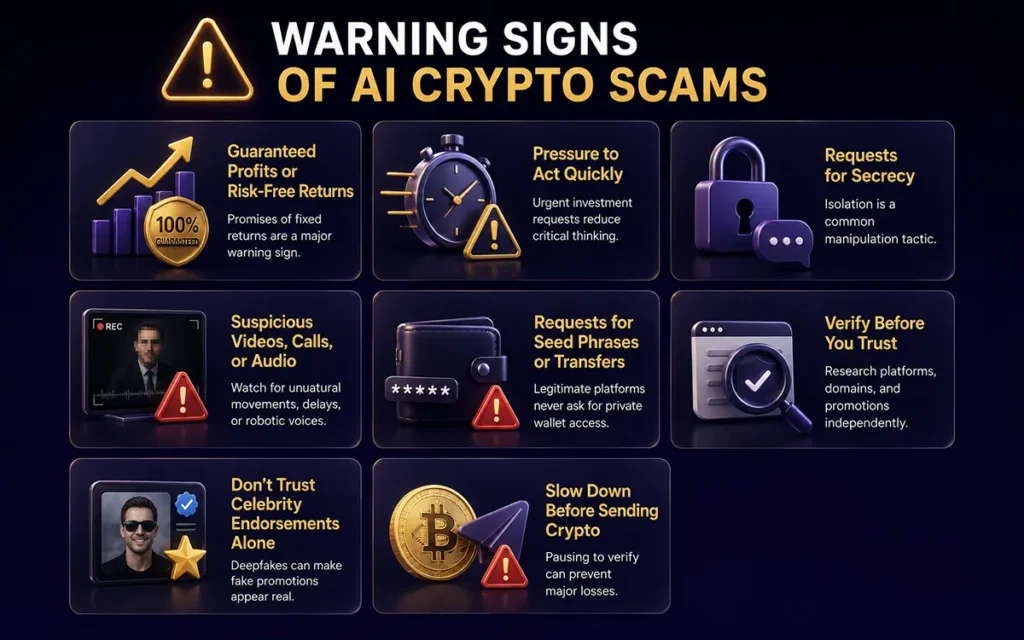
One of the biggest reasons AI crypto scams are so effective is that they often don’t look suspicious at first glance. Scam websites can appear polished, messages can sound natural, and fake videos or customer support interactions may feel surprisingly convincing. That’s why avoiding these scams is not just about spotting technical flaws. It’s also about recognizing the behavioral warning signs scammers rely on to push people into quick decisions.
Be cautious if you come across any of the following:
Guaranteed profits or “risk-free” returns
No legitimate crypto investment can guarantee fixed returns or promise easy profits with little to no risk. If someone claims you can double your money quickly, unlock a secret strategy, or access a low-risk opportunity with unusually high returns, that should be treated as a serious red flag.
Pressure to act immediately
Scammers often create urgency because rushed decisions leave less room for verification. They may claim that an offer expires within hours, that your wallet is suddenly at risk, or that you must transfer funds immediately to avoid losing access or missing out. Legitimate crypto platforms and investment opportunities do not rely on panic or pressure to force financial decisions.
Requests for secrecy
If someone tells you not to discuss an investment with family, friends, or financial advisors, take that seriously. Isolation is a common manipulation tactic in crypto scams because it reduces the chance that someone else will question the story, spot inconsistencies, or warn you before money is sent.
Suspicious videos, calls, or audio
AI-generated videos and voice content have become more realistic, but they still often contain subtle flaws. Watch for unnatural facial movements, lip-sync issues, robotic pauses, strange audio quality, or a voice that sounds slightly off. Even when a video or call looks convincing, it should not be treated as proof that an investment or platform is legitimate. Always verify claims through independent sources.
Requests for seed phrases, private keys, or emergency transfers
No legitimate exchange, wallet provider, or support team will ask for your seed phrase or private wallet keys. You should also be extremely cautious if someone tells you to move crypto urgently in order to “protect” your funds. Once crypto is transferred to a scammer-controlled wallet, recovering it becomes much harder.
Verify Before You Trust
Before investing in any crypto opportunity, take time to verify it independently rather than relying on the claims being presented to you. Search the platform name alongside terms like “scam,” “review,” or “complaints.” Check the website domain carefully for misspellings or unusual variations.
If a promotion mentions a known company, celebrity, or exchange, confirm it through official channels rather than through the link or message you received. Regulatory claims should also be checked independently instead of accepted at face value.
Extra caution is especially important if the investment opportunity arrived through an unsolicited message, social media outreach, or a direct message from someone you were not already in contact with.
Never Rely on Celebrity Endorsements Alone
Celebrity endorsements have become much easier to fake with AI tools, especially through deepfake videos and manipulated livestreams. A polished interview clip or a familiar public figure promoting a crypto opportunity does not make it legitimate. Celebrity appearances can create a false sense of trust, but they should never replace basic due diligence. Always verify promotions through official accounts, established reporting, or the company’s own verified channels before acting.
Slow Down Before Sending Crypto
One of the simplest and most effective ways to avoid an AI crypto scam is to slow down before transferring money. Scammers benefit when people act emotionally, feel pressured, or skip verification because the opportunity seems urgent.
Before sending crypto, pause and ask yourself a few basic questions. Did this opportunity arrive unexpectedly? Am I being pressured to act quickly? Have I verified the platform independently? Does the promised return sound unrealistic? Taking a few extra minutes to check those details can be enough to stop a costly mistake before it happens.
| Quick Safety Rule:If urgency, secrecy, and guaranteed profits appear together, treat it as a major warning sign. |
What to Do If You’ve Been Targeted or Scammed
Realizing you may have fallen for a crypto scam can feel overwhelming, especially when money is involved. Consumer protection agencies and fraud investigators generally recommend acting quickly, preserving evidence, and avoiding panic-driven decisions that could lead to further losses.
While crypto transactions are difficult to reverse, taking the right steps early may help limit further damage and improve reporting or tracing efforts.
1. Stop Communication Immediately
If you suspect fraud, stop responding to messages, calls, or emails right away.
Do not:
- send more money
- pay “unlock fees” or taxes
- follow new wallet instructions
- trust promises of guaranteed recovery
Many scammers try to keep victims engaged after the first payment by claiming additional deposits are needed.
2. Save Evidence Before It Disappears
Scam websites and accounts can disappear quickly.
Save:
- screenshots of chats and emails
- wallet addresses
- transaction IDs
- payment confirmations
- phone numbers and website links
This information may help with reporting or exchange investigations.
3. Contact Relevant Exchanges or Platforms
If funds were sent through a crypto exchange, contact support immediately.
Some exchanges may be able to:
- flag suspicious wallets
- investigate unusual activity
- assist with fraud reports
The sooner you act, the better.
4. Report the Scam
Reporting helps authorities track fraud trends and suspicious wallet activity.
Depending on your location, you may report incidents to:
- Federal Trade Commission
- FBI (IC3)
- local cybercrime or financial fraud portals (e.g., Capx Recovery)
Even if recovery isn’t guaranteed, reporting creates a useful record.
5. Be Careful of Recovery Scams
Scammers often target victims a second time by pretending they can recover stolen funds.
Be cautious of anyone promising guaranteed crypto recovery in exchange for:
- upfront fees
- wallet access
- “release payments”
If you need guidance on next steps after a crypto investment scam, learn more here: Crypto investment scam recovery services
| Important: Consumer protection agencies regularly warn that scammers often target victims twice through fake recovery services. Crypto recovery is complex, and no legitimate company can guarantee recovered funds. |
How AI Crypto Scams May Evolve Beyond 2026
AI-powered crypto scams are already becoming harder to spot, and cybersecurity researchers expect fraud tactics to become even more sophisticated as deepfakes, automation, and impersonation tools improve.
One major shift could be real-time deepfake interactions. Instead of pre-recorded videos, scammers may use live AI-generated calls that imitate trusted figures, company representatives, or financial professionals during conversations.
We may also see more AI-generated financial personas, fake advisors, or customer support agents capable of holding long, believable conversations across chat, email, and voice.
Phishing attacks are likely to become more personalized, too, using information pulled from social media or online behavior to make scam messages feel more convincing.
At the same time, cybersecurity firms and blockchain intelligence companies are improving fraud detection tools. While scams will continue evolving, awareness and verification will remain some of the strongest defenses.
The technology may get smarter, but one rule still applies: if something feels rushed, secretive, or too good to be true, verify before you act.
Staying Safe in the Age of AI Crypto Scams

AI is changing the way crypto scams operate, making fraud more convincing, personalized, and harder to recognize than ever before. From deepfake videos and cloned voices to fake investment platforms, scammers now have tools that can make even legitimate-looking opportunities feel believable.
That doesn’t mean every crypto investment is dangerous, but it does mean caution matters more in 2026.
Before trusting an investment, take time to verify the platform, question unrealistic promises, and avoid rushed decisions. A legitimate opportunity will still be there tomorrow. A scam usually depends on getting you to act today.
When it comes to crypto, slowing down and verifying information is often your best protection.
If you believe you’ve been targeted by a fake crypto investment platform or an AI-powered scam, acting quickly matters. Preserving transaction records, wallet addresses, and communication history can make it easier to understand what happened and explore possible next steps.
At Capx Recovery, we help individuals affected by crypto investment scams understand their situation and navigate the recovery process with informed guidance. If you need support after a suspected crypto scam, you can learn more about our crypto investment scam recovery services and explore your options.
Think you may have been targeted by an AI crypto scam? Don’t wait. Get clarity on your situation and take the next step before scammers cause further damage.
FAQS
Can AI create fake crypto investment videos?
Yes. Scammers can use deepfake technology to create convincing videos that appear to show celebrities, business leaders, or crypto influencers endorsing investment opportunities or giveaways. These videos are commonly shared through fake livestreams, social media ads, or cloned accounts to build trust quickly.
How do I know if a crypto platform is fake?
Fake crypto platforms often promise guaranteed returns, show unrealistic profits, delay withdrawals, or pressure users to deposit more funds. Always verify the website domain, research independent reviews, and avoid platforms recommended through unsolicited messages or online relationships.
Are AI crypto scams increasing in 2026?
AI-powered scams are becoming more common as fraudsters use automation, deepfakes, and personalized messaging to target victims at scale. Consumer protection agencies and cybersecurity firms have repeatedly warned that AI is making online financial scams harder to recognize.
What should I do after sending crypto to scammers?
Stop communication immediately, save evidence like wallet addresses and screenshots, contact any exchanges involved, and report the incident to relevant authorities. Avoid anyone promising guaranteed recovery, as recovery scams often target victims a second time.
Can stolen cryptocurrency be recovered?
Recovery depends on the situation, timing, and whether funds can still be traced through exchanges or blockchain analysis. While some cases see partial recovery, no service can guarantee results, so it’s important to stay cautious of recovery scams that demand upfront payments.