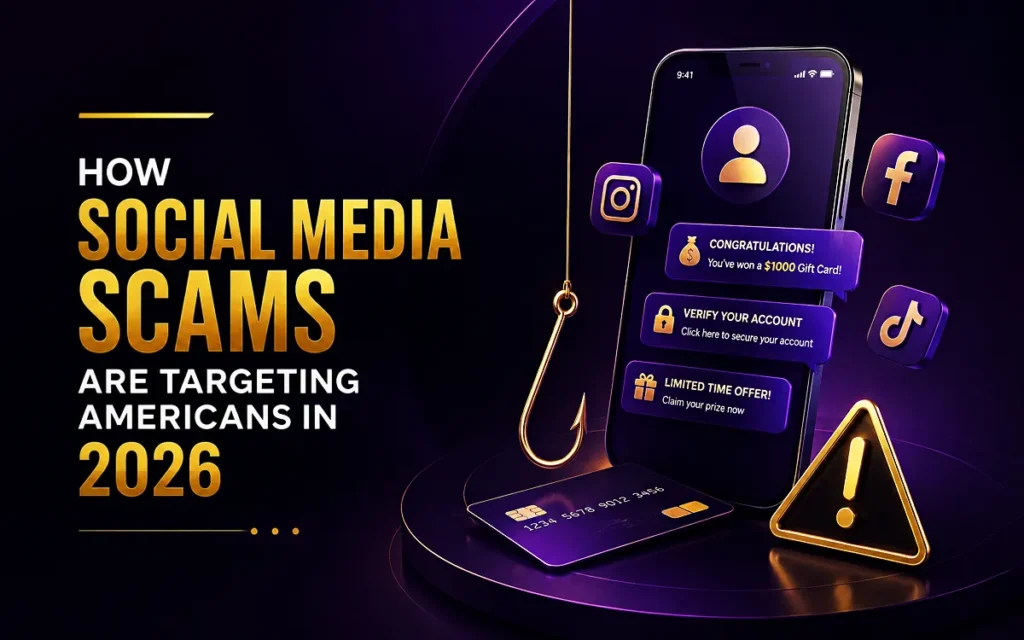
It starts small. A comment on your post from someone you don’t recognize. A message that opens with a compliment. Maybe it’s a “friend” you haven’t talked to in years, suddenly excited to tell you about a trading platform that’s changed their life. None of it feels like a scam at the moment. It feels like meeting someone, or catching a lucky break.
That’s exactly what makes social media scams so effective in 2026. They don’t look like the phishing emails or robocalls people learned to ignore years ago. They look like real conversations, built slowly, on platforms you already trust. It’s the same pattern we see over and over in online social media scam recovery cases at Capx Recovery.
According to the Federal Trade Commission, Americans lost $2.1 billion to scams that began on social media in 2025 alone. That’s eight times higher than in 2020. Nearly a third of everyone who reported losing money to a scam last year said it started with a post, an ad, or a message on a platform like Facebook, Instagram, or WhatsApp.
At Capx Recovery, we’ve worked with people who went through almost exactly this pattern, and one of the hardest parts is realizing how ordinary it felt while it was happening. So this article breaks down exactly how these scams work in 2026, which platforms they favor, the warning signs to catch early, and what to do if you’re already past the point of catching them.
Why Social Media Has Become the #1 Scam Gateway
Scammers go where the trust already exists, and social media hands it to them.
Nearly 30% of scam victims in 2025 said the fraud started on social media, more than any other contact method, including phone calls, texts, or email. A 2026 industry report found that 36% of people who came across a scam on a social platform went on to interact with it in some way.
A few reasons this keeps happening:
- Your posts are targeting data. Your job, your city, your relationship status, your recent trip. Scammers use it all to build a pitch that feels personal.
- Trust travels through the network. A message from a “friend” (often a cloned or hacked account) carries built-in credibility that a random email never will.
- Payment is frictionless. Venmo, crypto wallets, and gift cards move money fast, and once it’s gone, it’s gone.
- Ad review isn’t foolproof. Fake investment platforms and knockoff storefronts regularly slip through platform ad approval before getting flagged and removed.
If you’ve ever dealt with a fraudulent investment platform or a scam that moved from a dating app into a crypto pitch, this is the same playbook Capx Recovery sees behind online social media scams more broadly. The scam usually doesn’t stay on the platform where it started. It moves you somewhere less visible on purpose, which is often the exact point where tracing the money gets harder.
7 Top Social Media Scams Targeting Americans in 2026
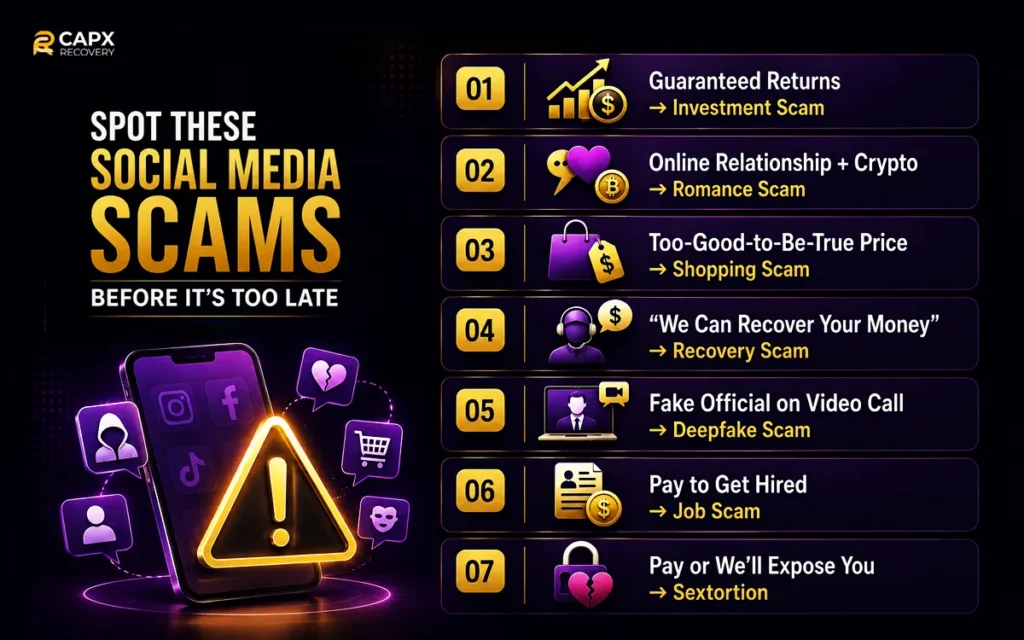
Scammers aren’t running one playbook. They’re running several at once, each tuned to a different platform and a different kind of trust. Some go after your wallet directly with fake investment returns. Others go after your emotions first and your money second.
Below are the seven most common social media scams Americans are encountering in 2026 and the warning signs that often appear before money is lost.
1. Investment and Crypto Trading Scams
This is the costliest category by dollar amount. Investment scams that began on social media accounted for over a billion dollars in reported losses last year, more than any other type.
The pattern is consistent: a slick ad or an unsolicited DM promises guaranteed returns. You’re shown a dashboard with fake profits climbing every day. When you try to withdraw, you’re told you need to pay a tax, a fee, or make one more deposit first. The withdrawal never actually happens.
Red flag: any platform where depositing money is effortless but withdrawing it suddenly comes with new conditions.
If this sounds familiar, Capx Recovery’s crypto investment scam recovery team traces where deposits actually went once they leave a fake platform, using blockchain records rather than the numbers shown on a scammer’s dashboard, and can tell you what’s realistically recoverable before you spend anything on the case.
2. Romance Scams (Increasingly Called “Pig Butchering”)
Close to 60% of people who lost money to a romance scam in 2025 said it started on social media. The scammer, often called a catfisher, builds a relationship over weeks or months through DMs, dating apps, or messaging platforms. Once trust is established, they introduce a financial opportunity, usually crypto.
AARP has noted that fraud investigators are increasingly calling these “friendship scams” instead of romance scams, since the real goal isn’t romance. It’s building any kind of trusted relationship that can be used to steer someone into a fake investment.
Red flag: someone who won’t video call, won’t meet in person, and eventually brings up an investment “opportunity.”
For anyone already caught in this pattern, Capx Recovery’s romance scam recovery team has worked cases where the relationship was fake from the first message, and knows how to trace funds once they’ve been moved into crypto, without judgment about how the scam started.
3. Online Shopping and Marketplace Scams
Shopping scams are the single most reported type of social media fraud. Scammers run ads for heavily discounted products that either impersonate a well-known brand or lead to a storefront that doesn’t exist once you’ve paid. Items never arrive, or what shows up is a cheap knockoff.
This shows up most often in Instagram and Facebook ads, Marketplace listings, and product promotions on TikTok.
Red flag: prices far below market value, checkout redirecting to an unfamiliar domain, or no reviews anywhere outside the ad itself.
If you paid by credit card, your bank’s dispute process is usually the fastest path back. If the payment went out as a wire transfer or crypto, Capx Recovery can look at whether that specific transaction is traceable.
4. Fake Recovery Scams Targeting Previous Victims
This one is new and worth taking seriously. In July 2026, the FBI’s Internet Crime Complaint Center (IC3) issued an alert describing scammers who impersonate FBI and IC3 personnel to re-target people who already reported being scammed once.
The scheme works two ways. In one version, a victim tells the original scammer they plan to report them to the FBI. Weeks later, someone posing as an FBI agent contacts the victim on Facebook Messenger, offering to “help” with the report, then sends a malicious link. In the other, scammers use AI-generated deepfake videos of FBI officials promoting a spoofed IC3 website that collects personal information under the guise of filing a complaint.
The IC3 has been direct about this: it doesn’t run a social media presence, and it never asks for payment to recover lost funds or refers victims to a paid recovery company. Any legitimate recovery firm should be transparent about that same standard, explaining what’s realistically possible before asking for anything.
Red flag: anyone who contacts you first on social media claiming they can recover money you already lost, especially if they ask for a fee upfront.
5. AI Deepfake and “Digital Arrest” Scams
Scammers are now using AI-generated video and voice cloning to impersonate law enforcement, executives, or family members in real time. The “digital arrest” version has scammers posing as police or customs officials on a video call, claiming you’re under investigation and pressuring you to pay a fine immediately to avoid arrest. It’s already common in parts of Asia and is starting to show up in the U.S.
The FBI recommends watching for the same tells that give away most deepfakes: distorted hands, unnatural facial movement, voice lag, or lighting and shadows that don’t quite match.
Red flag: any call that pressures you to act immediately, pay before you can verify anything, or stay on the line without hanging up to confirm independently.
6. Employment and “Easy Money” Job Scams
With layoffs continuing into 2026, fake remote job listings have picked up across LinkedIn, Instagram, and Facebook groups. Scammers post appealing listings, then ask for a “processing fee,” equipment deposit, or bank details before the job even starts.
Red flag: a real employer never asks you to pay them to get hired.
7. Sextortion and Blackmail Scams Tied to Social Profiles
Scammers scrape photos and personal details from social media to make blackmail emails feel personal and credible. Then, they claim to have compromising footage or information and demand payment to keep quiet. These often spike after major data breaches or trending news stories, when scammers have fresh personal data to work with.
Red flag: any unsolicited threat demanding payment. The right move is to never respond, since replying just confirms your account is active.
Which Platforms Are Scammers Using Most in 2026?
Not every platform attracts the same scam. Facebook still leans heavily on impersonation and marketplace fraud, while Instagram and TikTok are better suited to flashy ads and fake giveaways. Knowing which scam tends to show up makes it easier to spot one before it gets you.
| Platform | Most Common Scam Type | Red Flag to Watch |
| Facebook / Messenger | Marketplace fraud, fake recovery scams | Cloned profiles, urgent DMs from “friends” |
| Investment ads, fake influencer endorsements | Too-good crypto returns, new accounts with a verified look | |
| WhatsApp / Telegram | Romance-to-investment scams | Being asked to move the conversation off the original platform |
| TikTok | Shopping scams, fake giveaways | Unrealistic discounts, checkout links that lead off-platform |
| Employment scams | Recruiters who can’t verify their company or role |
How to Spot a Social Media Scam
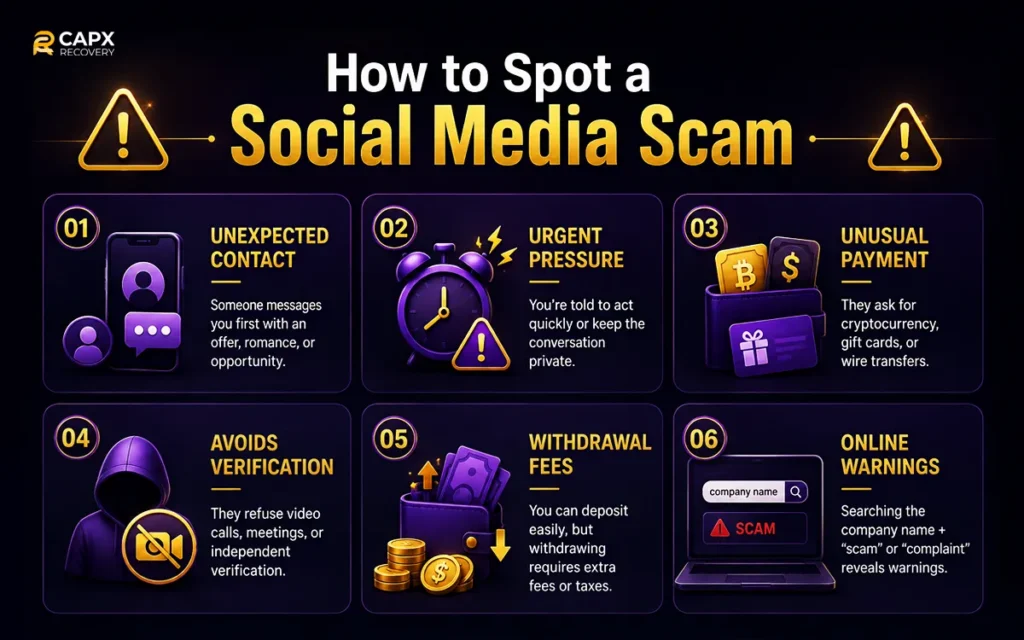
Every scam above looks a little different on the surface, but they tend to share the same underlying mechanics. Once you know what to look for, most of them become easy to spot in the first message or two.
A few patterns show up again and again, no matter which scam it is:
- You were contacted first, out of nowhere, with an offer of money, romance, or opportunity.
- There’s pressure to act fast or keep things private.
- You’re asked to pay with a gift card, wire transfer, or cryptocurrency.
- The other person avoids video calls or meeting in person.
- Depositing money is easy, but withdrawing it suddenly requires a fee or a tax.
- Searching the company’s name alongside “scam” or “complaint” turns up warnings.
If two or more of these apply, slow down before sending anything else.
What to Do If You’ve Already Been Scammed on Social Media
If you’re past the warning signs and already out of money, the next few steps matter more than anything else. What you do in the first days after realizing you’ve been scammed can affect whether any of it is recoverable.
Here’s the order that actually helps:
- Stop sending money immediately. No legitimate platform requires ongoing payments to unlock funds that are already yours.
- Save everything. Screenshots, transaction IDs, wallet addresses, usernames, and every message exchanged.
- Report it. File with the FTC at ReportFraud.ftc.gov and the FBI at IC3.gov. Victims 60 or older can also reach the DOJ Elder Justice Hotline at 1-833-372-8311.
- Watch for re-targeting. Scammers sometimes return months later posing as recovery agents or law enforcement, offering a “second chance” to get your money back. The FBI specifically warned about this pattern in July 2026.
- Get a professional case review before paying anyone for recovery help. A legitimate fraud investigator will explain what’s realistically possible for your case without demanding payment upfront or guaranteeing an outcome.
If you’re not sure what your next step should be, a free case evaluation with Capx Recovery can help you understand whether your funds are traceable and what options are actually available, before you commit to anything.
Protecting Yourself Going Forward

Scammers move faster than platform moderation can keep up with, and 2026 has added AI-generated video and voice to their toolkit. But the underlying pattern hasn’t changed much: unsolicited contact, urgency, and an unusual payment method are still the three signs that show up in nearly every case.
If you recognize that pattern early, you can walk away before any money changes hands. If it’s already too late, you’re not without options. Capx Recovery offers a free evaluation to help you find out what actually happened to your money and what steps make sense from here, with no pressure and no upfront fees.
FAQ
What is the most common social media scam right now?
Shopping scams are reported most often, but investment scams cause the largest dollar losses per victim.
Can I get my money back after a social media scam?
It depends on how the funds moved and how quickly you act. Some cases allow partial or full recovery, especially when funds passed through a traceable exchange. A free case review can tell you what's realistic for your situation.
Should I report a social media scam even if I didn't lose money?
Yes. Reporting close calls helps the FTC and FBI track new tactics and warn other people faster.