

Social media scams are no longer uncommon. They appear in the most ordinary locations, such as a straightforward message, a comment, or even a sponsored advertisement.
Many of these scams are designed to look convincing at first glance, which makes them difficult to recognize until money or personal information is involved. That’s why learning how to spot a social media scam becomes important before engaging with offers, unknown accounts, or urgent requests.
On the surface, there is nothing wrong. The portrait is lifelike. The message is normal. It can even be delivered by someone you know.
This is why such scams are effective.
The majority of social media scams no longer appear like scams. They are created to be unobtrusive, form trust, and make you take action before you pause and wonder what is occurring.
A scammer can shift to a financial request in a few messages in numerous situations.
This article will help you recognize the warning signs of social media scams, understand the tactics scammers use, and learn the steps involved in social media scam recovery if you ever become a victim. By staying informed and cautious, you can better protect your personal information, finances, and online identity.
What Is a Social Media Scam?
A social media scam is a kind of cyber fraud in which a person tricks you into giving money or sensitive data on websites such as Instagram, Facebook, WhatsApp, or TikTok.
It is typically initiated by a simple interaction. A comment, a follow request, a message, which initially feels like a normal one. With time, this dialogue develops trust, and then they ask.
That request could be:
- sending money
- investing in an opportunity
- sharing personal or financial details
- clicking a link that leads to a fake page
The key point is this. The platform itself isn’t the problem. It’s how scammers use it to reach you directly and make the interaction feel personal.
These scams often follow predictable patterns, even if the stories or profiles behind them look different.
Most Common Social Media Scams (2026)

Social media scams come in different forms, but most follow familiar patterns. Once you recognize them, they’re much easier to spot.
Here are the most common types:
1. Fake Giveaways and Prizes
You’re told you’ve won a contest or reward. To claim it, you need to click a link, pay a small fee, or share personal details.
2. Investment and Crypto Scams
You’re offered high returns through trading or crypto platforms. The setup looks legitimate, but the goal is to get you to deposit money you won’t get back through fraudulent crypto trading platforms.
3. Romance Scams
A connection builds over time through messages. Once trust is established, you’re asked for financial help or support, which leads to a romance scam.
4. Impersonation Scams
Scammers pose as friends, influencers, or brands. They may ask for money, promote fake offers, or send malicious links.
5. Fake Job Offers
You’re offered a remote job or side income opportunity. Before starting, you’re asked to pay for training, tools, or verification.
6. Marketplace Scams
You buy or sell items through social platforms, but the payment or product never arrives as promised.
Most of these scams begin the same way, with an unexpected message or opportunity that feels just believable enough to engage with.
How Social Media Scams Work (Step-by-Step)
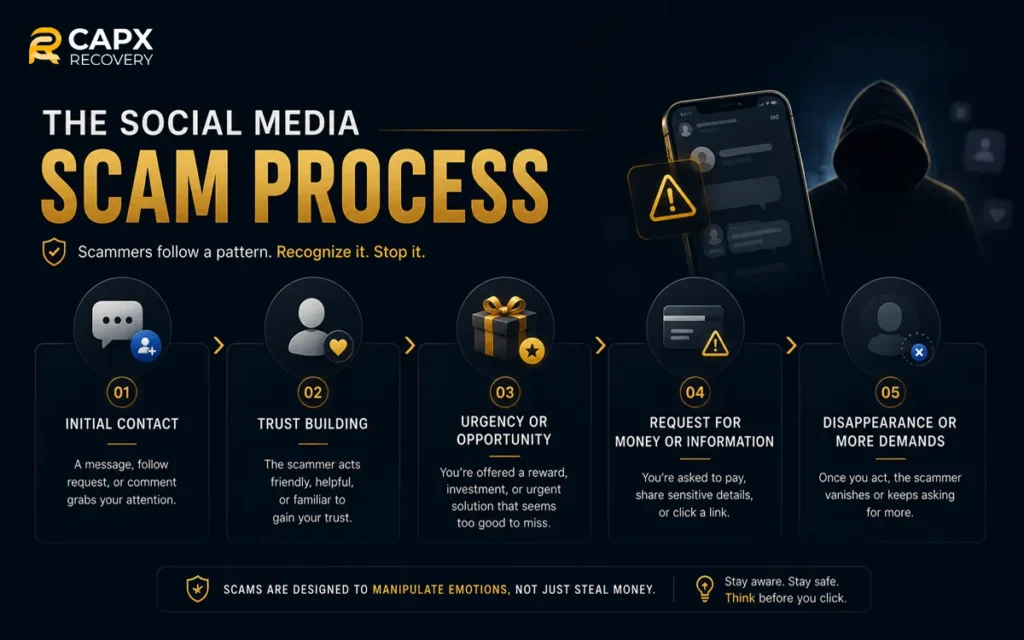
Most social media scams follow a simple, repeatable flow. The details may change, but the structure stays the same.
Here’s how it typically unfolds:
1. Initial Contact
It starts with a message, a follow request, or a comment. Sometimes it comes from a profile that looks familiar or trustworthy.
2. Trust Building
The conversation feels normal. The scammer may act friendly, helpful, or professional. In some cases, they pretend to be someone you know or a verified account.
3. Opportunity or Urgency
You’re presented with something that requires action. It could be an investment, a reward, a job offer, or a problem that needs immediate attention.
4. Request for Money or Information
This is the turning point. You’re asked to send money, share sensitive details, or click a link.
5. Disappearance or Continued Demands
Once you act, either the scammer disappears or continues asking for more, often claiming additional fees or complications.
Many of these scams move quickly. What starts as a casual interaction can turn into a financial request within minutes.
This is the same pattern seen in advance fee scam tactics used in financial and investment fraud, where urgency and trust are used to push quick decisions.
Red Flags to Watch For
A majority of scams on social media are easily identified when you are aware of the red flags to watch out for. Such red flags are usually present even before the request for any money.
The following are the main red flags:
Unforeseen Messages Or Communication.
You get a message that is sent by a person that you are not well acquainted with, or a familiar name that seems a little out of place.
Urgency Or Pressure
You are compelled to take immediate action using words such as limited time, act now or do not miss this.
Too Good To Be True Offers
Paying guaranteed profits, free money, and rewards you have not even competed to receive are good signs of a scam.
Money Or Sensitive Information Requests
You are requested to send money, give personal information, or provide access to an account.
Untrustworthy Links Or Redirects
You are forwarded links to sites that you have never seen or that are not well-designed.
Disagreeable Or Imprecise Records
The account can contain a limited number of posts, be recently active, or have incompatible information. When something seems hurried or uncharacteristically gratifying, step back. Fraudsters are dependent on haste. It is not necessary to break the pattern by going very slowly.
How to Verify If It’s a Scam
If something feels off, take a moment to check before you respond. A quick verification step can save you from a much bigger problem.
Here’s how to do it:
Check The Profile Carefully
Look at account age, posts, followers, and activity. Fake profiles often have limited history or inconsistent content.
Search For Duplicates
Scammers often copy real accounts. Look for similar profiles with slight differences in username or details.
Verify Outside The Platform
If someone claims to be a brand, company, or even a friend, confirm through an official website or another trusted channel.
Avoid Clicking Unknown Links
Instead of clicking, manually search for the website or service. This reduces the risk of landing on a fake page.
Look For Engagement Authenticity
Fake accounts often have low-quality engagement or generic comments that don’t match the content.
Verification doesn’t take long. But skipping it is exactly what scammers rely on.
What to Do If You’ve Been Targeted
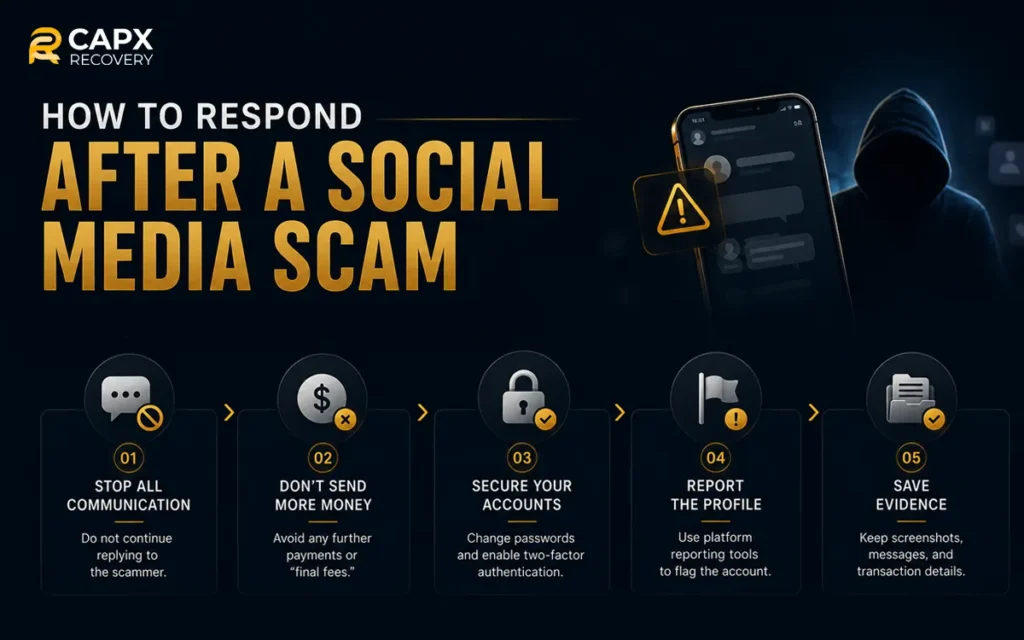
If you think you’ve interacted with a scam, don’t panic. What matters most is what you do next.
Here are the steps to take:
1. Stop All Communication
Do not reply further. Scammers rely on keeping the conversation going to apply more pressure.
2. Do Not Send Any Money
If you haven’t paid yet, don’t. If you have, avoid sending anything further, even if you’re told it’s the “final step.”
3. Secure Your Accounts
Change passwords, enable two-factor authentication, and review your accounts for any unusual activity.
4. Report The Account
Use the platform’s reporting tools to flag the profile. This helps prevent others from being targeted.
5. Save All Evidence
Keep screenshots, messages, transaction details, and links. This information is important if you need to take further action.
If money has already been sent, acting quickly can make a difference.
Many of these cases follow patterns similar to fake tax and withdrawal fee scams that block access to your funds, where victims are pushed into repeated payments.
Taking early action helps limit damage and keeps the situation from escalating further.
If you’ve already sent money or shared sensitive information, getting professional guidance early can help you understand your options and respond before the situation gets worse. This is where Capx Recovery can support victims by helping assess scam-related fund recovery concerns and guiding next steps after suspected fraud.
How Capx Recovery Helps After Social Media Scams
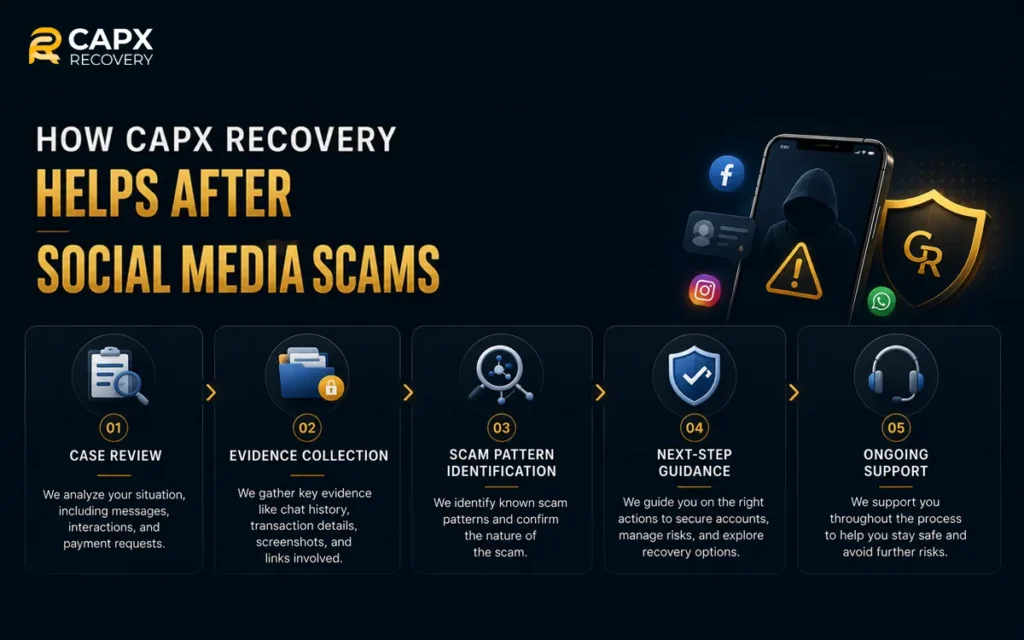
If you’ve been targeted or have already lost money through a social media scam, figuring out what to do next can feel overwhelming. This is where Capx Recovery helps bring clarity to the situation.
The focus is not just on identifying the scam, but on taking structured steps toward resolving it and exploring possible recovery options.
Here’s how the process works:
Case Review
Your situation is analyzed in detail, including messages, platform interactions, and any payment requests. This helps determine how the scam was carried out.
Evidence Collection
All relevant information is gathered, such as:
- chat history
- transaction details
- screenshots
- links and profiles involved
This creates a clear record of the incident.
Scam Pattern Identification
Capx Recovery evaluates the case to identify known scam patterns. Many social media scams follow repeatable structures, which helps confirm what you’re dealing with.
Next-Step Guidance
Based on the findings, you’re guided on what actions to take, whether it’s securing accounts, handling financial exposure, or moving forward with recovery steps.
Ongoing Support
You’re supported throughout the process to ensure you don’t fall into further traps or repeated scam attempts.
Social media scams are designed to create confusion and urgency. Having a structured approach makes it easier to step back, understand what happened, and take control of the situation.
Stay Alert and Take Action Early

There are scams on social media that are all over, yet they have patterns. When you know how they operate, it will be a lot easier to know them before they get out of control.
The following are things to keep in mind:
- The beginnings of most scams are a simple message or interaction.
- They establish trust within a short time and generate urgency.
- They drive you into a monetary choice prior to checking.
When something does not feel right, make no mistake. Stop, examine, and gain control before taking action.
Do not wait, in case you are already targeted or have lost money. The delay, the more difficult it is to take meaningful action.The right guidance at the right time can help. Capx Recovery assists you in evaluating your situation, knowing what has happened, and taking the right actions in the defense of your finances and the possibility of recovery. Contact Us to review your situation, understand what happened, and explore the appropriate steps to help protect your finances and support your recovery efforts.
FAQ
How do scammers contact you on social media?
They usually reach out through direct messages, comments, follow requests, or even ads. The interaction often feels normal at first.
How can you tell if a profile is fake?
Look for signs like low activity, recently created accounts, mismatched details, or duplicate profiles pretending to be someone else.
Is it safe to click links sent in messages?
No. Avoid clicking links from unknown or unverified sources. Always go directly to official websites instead.
Can you recover money lost to a social media scam?
Recovery depends on how the payment was made and how quickly action is taken. Acting early can improve the chances.
What should you do immediately after spotting a scam?
Stop communication, avoid sending money, secure your accounts, report the profile, and save all evidence.