

Frozen Crypto has become a real concern since 2025. More people are dealing with locked wallets, blocked withdrawals, or tokens they suddenly can’t move. It is happening across exchanges, blockchains, and even smart contract–based projects as rules tighten and scams grow more sophisticated.
If your coins ever get stuck, it helps to understand why it happens and what you can realistically do. Freezes today can come from compliance checks, legal action, suspicious transfers, or even built-in token controls. Sometimes it’s temporary. Sometimes it’s a sign of a bigger issue.
This guide walks you through how crypto freezing works, why it happens, how to fix it, and how to stay safe. It also helps to understand how urgency and fear are used in crypto wallet scams, as these tactics are often used to pressure users into risky actions. Everything here is based on the latest 2025 trends, updated rules, and real cases from exchanges and blockchain analytics teams.
Why Crypto Wallets Are Frozen?
Most freezes today are linked to fraud cases. Scammers use fast-moving wallets to hide stolen funds, and exchanges rely on blockchain analytics tools to trace those movements. When a wallet gets flagged, anything connected to it can be frozen until investigators sort things out.
In recent enforcement actions, major stablecoin issuers and authorities have frozen crypto assets worth over $1.4 billion across more than 5,000 wallet addresses tied to scams, sanctions violations, and illicit activity. Once a wallet is blacklisted, transactions are restricted, and access to the funds typically remains blocked pending investigation or legal review.
Chargebacks or Suspicious Deposits
If someone deposits funds into an exchange using a bank account or card, and that payment later gets reversed, the exchange often locks the linked crypto to prevent loss. Even if the chargeback wasn’t your fault, your account can still get pulled into the review. This is one of the most common reasons new users see their accounts restricted.
Incorrect KYC or Flagged Activity
Small inconsistencies in identity documents, location changes, or mismatched personal information can trigger a freeze. Some platforms also block withdrawals if they detect login attempts from unusual regions or VPNs. Until you clear the compliance check, funds stay stuck.
Smart Contract or Network-Level Freezes
Some tokens come with administrative controls that allow issuers to stop transfers from specific wallets. This is common with stablecoins, wrapped assets, and newer compliance-focused projects. If your wallet gets blacklisted at the contract level, the freeze applies directly on-chain, not just inside an exchange.
Scams Involving Frozen Crypto Wallets
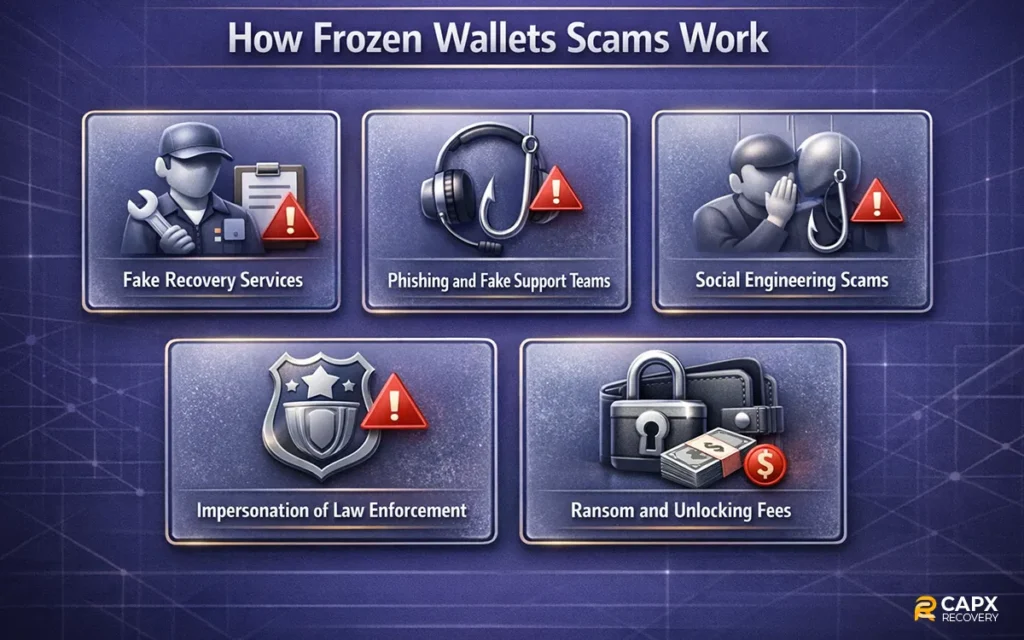
Freezes have become a convenient excuse for scammers. Many victims only realize they’ve been tricked after someone claims their wallet is locked and asks for money to unblock it. These schemes often copy the language of real exchanges or law enforcement agencies, which makes them harder to spot.
Fake Recovery Services
Scammers pose as experts who can unfreeze your crypto for a fee. They promise fast results or inside access to exchanges. Once you pay, they disappear. Real recovery professionals never guarantee outcomes or ask for crypto upfront.
Phishing and Fake Support Teams
Fraudsters create fake support chats, emails, and websites that look like official exchange help pages. They ask for seed phrases, passwords, or remote access to your device. Sharing these details gives them full control of your wallet.
Social Engineering Scams
These scams rely heavily on social manipulation. Understanding how social engineering works in the crypto world is a key step in staying safe from crypto fraud and manipulation.
Criminals often use the same psychological tactics seen in other online frauds, and this guide breaks down those methods by examining cybercriminal behavior and common manipulation techniques.
Impersonation of Law Enforcement
Some scammers pretend to be from cybercrime units or financial regulators. They send fake freeze notices and demand verification fees or case-processing charges. Real agencies never ask victims for payment to release funds.
Ransom and Unlocking Fees
If you’re told to pay a release fee or “unfreezing tax,” it’s almost always a scam. Exchanges don’t charge unlock fees, and on-chain freezes cannot be lifted with a simple payment.
Red Flags to Identify Frozen Wallet Scam
Identifying the following red flags will help you stay aware even before the scam approaches you.
| Red Flag | What It Means | Why It’s Dangerous |
| Requests for seed phrases | Trying to take over your wallet | Gives full access to funds |
| Demands for upfront fees | Fake recovery service | You lose money immediately |
| Emails from unofficial domains | Phishing attempt | Can lead to stolen accounts |
| Claims of guaranteed recovery | False promise | Real recovery is never guaranteed |
| Pressure to act quickly | Scam tactic | Prevents you from verifying the source |
In case you observe any of these red flags, read more about how to avoid being scammed.
How to Avoid Frozen Crypto Wallet Scam?
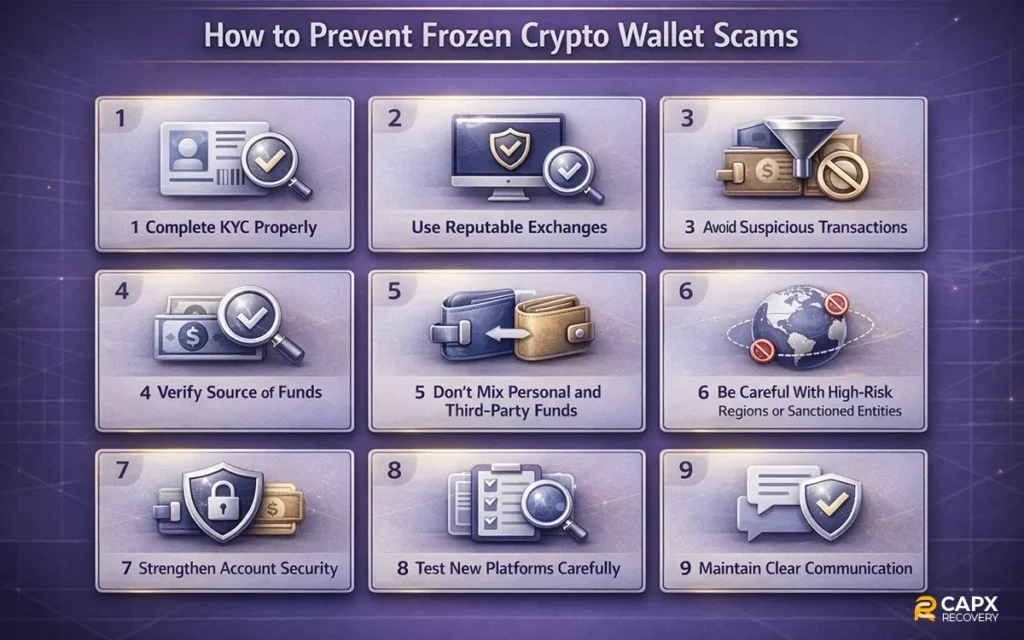
Preventing a wallet freeze is largely about compliance, transparency, and strong security practices. While not all freezes can be avoided, you can significantly reduce the risk by taking the following precautions:
1. Complete KYC Properly
Always finish identity verification on exchanges you use. Submit accurate documents and keep your profile updated to avoid compliance flags.
2. Use Reputable Exchanges
Stick to well-known, regulated platforms with clear compliance policies. Avoid obscure exchanges with little transparency.
3. Avoid Suspicious Transactions
Do not interact with unknown wallet addresses, high-risk DeFi platforms, or funds from unverified sources, as these are often linked to DeFi scams. Even unknowingly receiving such funds can trigger automated AML flags.
4. Verify Source of Funds
Ensure your crypto comes from legitimate, traceable sources. Keep records of purchases, transfers, and trading history in case compliance teams request proof.
5. Don’t Mix Personal and Third-Party Funds
Avoid moving crypto for friends, online contacts, or unknown individuals. Acting as an intermediary can expose your wallet to regulatory scrutiny.
6. Be Careful With High-Risk Regions or Sanctioned Entities
Transactions involving sanctioned countries or flagged addresses can result in immediate freezing under global compliance rules.
7. Strengthen Account Security
Enable two-factor authentication (2FA), use strong passwords, and avoid sharing account access. Security breaches can lead to temporary freezes during investigations.
8. Test New Platforms Carefully
If using a new exchange or wallet, start with small amounts and monitor how withdrawals and compliance checks are handled.
9. Maintain Clear Communication
If you anticipate large transactions, ensure your exchange profile is fully verified to reduce the chance of automated risk controls being triggered.
Being proactive, compliant, and security-conscious is the best way to reduce the likelihood of a frozen crypto wallet. For a straightforward guide on identifying and reporting suspicious activity, refer to this cryptocurrency scams guide that explains how to spot, report, and recover from fraud.
How to Recover from a Frozen Crypto Wallet?
Most freezes on exchanges are tied to compliance checks, so the solution is usually straightforward. Fix any mismatched KYC details and submit the documents they request. If the issue came from a risky deposit or a flagged transaction, you may need to provide proof of where the funds came from.
1. Confirm the Reason for the Freeze
Start by identifying why the wallet was frozen. Check official emails, in-app notifications, or account alerts from the exchange or wallet provider. Freezes usually happen due to KYC issues, suspicious transactions, AML (Anti-Money Laundering) flags, sanctions screening, or law-enforcement requests. Always verify through the platform’s official website not through links sent via messages.
2. Contact Official Customer Support
Reach out directly to the exchange or wallet provider using verified support channels. Submit a formal support ticket and request clarification. Keep communication professional and provide your registered email, transaction details, and account ID.
3. Complete KYC/Compliance Requirements
Many freezes are compliance-related. You may need to submit identity documents (passport, driver’s license), proof of address, or a selfie verification. In some cases, you must provide proof of source of funds, such as bank statements or transaction history.
4. Provide Transaction Documentation
Prepare detailed records, including wallet addresses, TXIDs (transaction IDs), deposit sources, and screenshots. If the funds came from another exchange, include supporting documentation showing legitimate transfers.
5. Respond Promptly to Compliance Queries
Compliance teams may ask additional questions about trading activity or fund origins. Clear, honest, and timely responses help speed up the review process.
6. Understand Stablecoin Blacklisting
If your wallet holds blacklisted stablecoins (like USDT or USDC), only the issuing company can reverse the freeze — usually after legal or law-enforcement clearance. Exchanges cannot override this independently.
7. Seek Legal Assistance if Necessary
If the freeze is linked to an investigation or third-party complaint, consult a lawyer experienced in financial or crypto regulation. Legal representation may be required for formal appeals.
8. Beware of “Unfreeze” Scams
After a freeze, scammers may contact you claiming they can unlock your wallet for a fee. No legitimate recovery process requires upfront crypto payments to unknown agents.
9. Strengthen Account Security
Once resolved, enable two-factor authentication (2FA), review connected apps, and consider using cold storage for long-term holdings to reduce future risks.
Recovery can take time, depending on regulatory review and platform policies, but proper documentation and verified communication are the safest path forward. Do not fall for fake recovery services. Always consult a legitimate recovery service provider like Capx Recovery.
Staying Proactive in Difficult Times
Frozen crypto is stressful, but most situations have a clear path forward once you understand what triggered the issue. A freeze doesn’t always signal wrongdoing. Many cases are simply compliance checks or misunderstandings that clear up once you verify your details.
Staying proactive helps. Use platforms that follow proper regulations, keep your information up to date, and avoid risky transfers or unknown wallets. If something ever feels off, act quickly, ask questions, and rely only on official support channels. With the right steps, you can keep your assets safer and navigate the process with confidence. In case you want to learn how to spot crypto fraud and recover your losses, contact us to connect with experts at Capx Recovery.
FAQs
How long does a crypto freeze usually last?
Most compliance reviews are clear within a few days once you provide the right information. Cases tied to fraud or legal orders take longer because multiple agencies may be involved. The timeline depends entirely on the reason behind the freeze.
Can frozen crypto be recovered?
Yes, in many cases, you can recover access once the issue is verified. If the freeze is due to a mistake, KYC mismatch, or flagged deposit, exchanges usually unlock the funds. Recovery is harder when the freeze is part of a criminal case or the token issuer refuses to reverse it.
What should I do if an exchange falsely flags my account?
Reach out to support, explain the situation, and submit any documents they request. Providing clear proof of funds often speeds up the review. Keep records of your deposits and transfers so you can respond quickly.
How do I know if a recovery service is real or a scam?
Real experts never ask for seed phrases, never guarantee results, and don’t demand upfront fees in crypto. They work through documented channels and can explain their process clearly. If someone pressures you, uses a personal email, or claims they can unlock funds instantly, it’s a scam.